
What retiring at 31 taught one of America's most recognizable consumer advocates about financial freedom, finding purpose, and living a meaningful life.
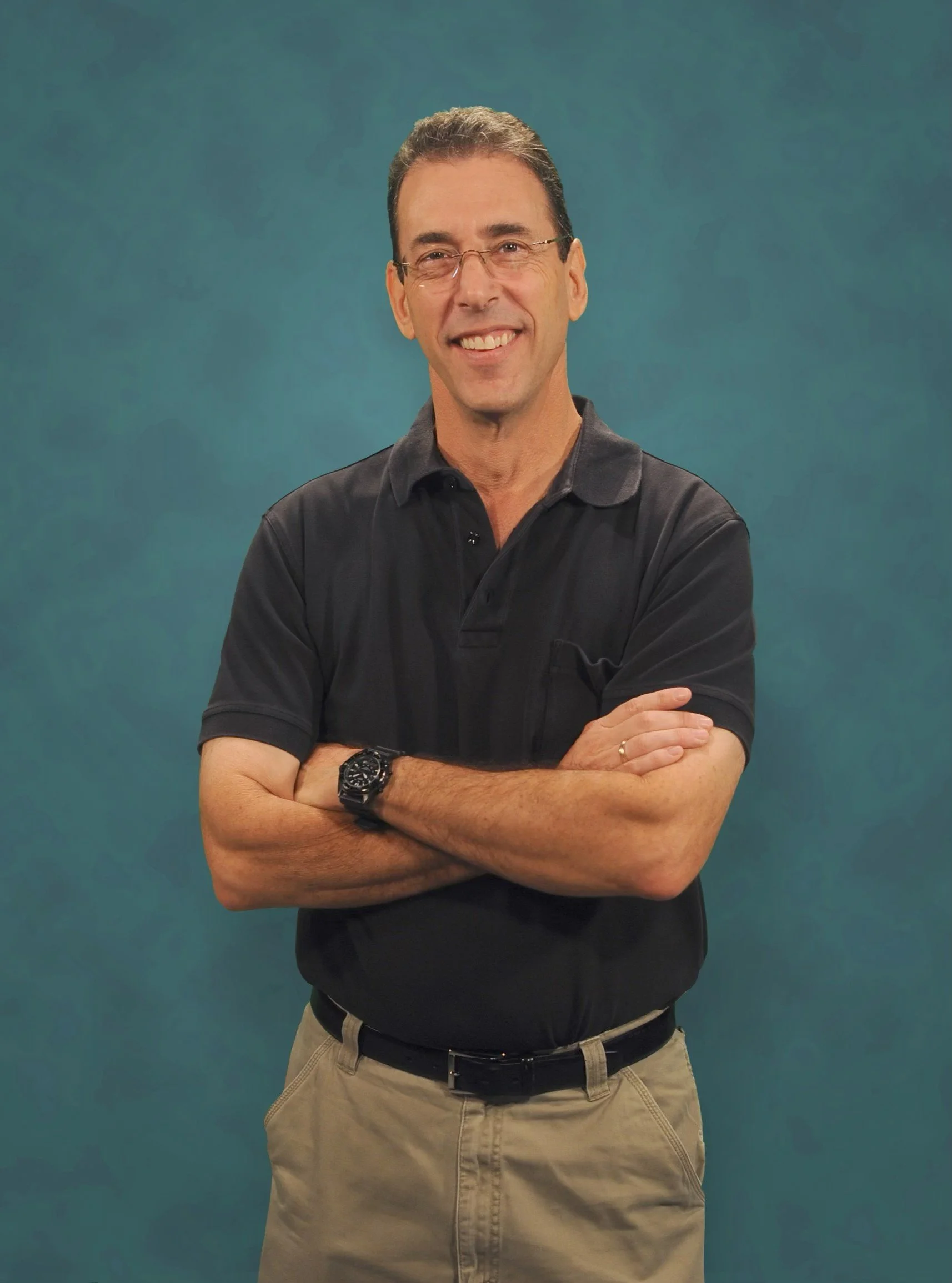
Photo courtesy of Clark Howard.
Clark Howard retired at 31.
Clark Howard has spent more than three decades teaching Americans how to save more, spend less, and avoid getting ripped off.
But I didn't want to interview Clark Howard about consumer advocacy.
I wanted to understand what shaped his relationship with money, why he walked away from a successful business at 31, and what brought him back to work when he never needed another paycheck.
Clark is 71 years old. He's been financially independent for four decades. He could spend the rest of his life on his favorite beach, traveling the world, or doing absolutely nothing.
Instead, he's working full-time, teaching people how to make better financial decisions, building homes for families, and helping thousands of children in foster care experience the joy of Christmas.
Why?
That's what I wanted to understand.
While listening to and reflecting on our conversation after the fact, I connected dots that I never saw during the interview. Clark had imparted a newfound perspective to me on three things: independence, luck & hard work, and living richly. Please share them with the people in your corner.
1. Financial Independence Is the Beginning, Not the End.
In 1987, Clark Howard sold Action Travel, the business he had built from the ground up, and retired at 31.
He moved to Ponte Vedra Beach, Florida, rented a condo near the ocean in Sawgrass, and settled into what many of us would consider the perfect retirement.
He biked 20 miles a day, swam a mile twice a day, and spent his afternoons on the beach.
And eventually, he got bored.
When I asked him what he learned about retirement that people counting the seconds until their own retirement should understand, his answer was surprisingly simple.
"You've got to have things that matter to you."
He explained that walking away from work also means walking away from a routine, an identity, and often a community. For Clark, volunteering became a way to stay engaged, meet people, and contribute to something larger than himself.
His retirement ultimately became a sabbatical.
When Clark eventually stumbled into broadcasting, he realized that financial independence gave him something more valuable than the ability to stop working.
It gave him the freedom to work and live without fear.
He could speak his mind without worrying about losing his job. He could refuse lucrative endorsement deals because he didn't need the money. He could put the interests of his audience above the interests of advertisers.
He described himself as "unbought and unbossed."
As an advisor, I spend much of my professional life helping people prepare for and live in retirement. We talk about investment portfolios, withdrawal rates, Social Security, taxes, and whether their money will last.
These are the building blocks of retirement planning. The objective fundamentals. What I call Retirement IQ.
But what's often missing from the conversation is the why. What gives you purpose? What gets you out of bed in the morning? What makes your life meaningful when you no longer have to work?
That's Retirement EQ.
And that's what Clark really tapped into during our conversation.
You don't have to be an entrepreneur. You don't have to sell a company at 31. You may spend your entire career working for someone else, collecting a W-2, and diligently putting money away.
You might not achieve financial independence until you're 55, 60, or 65.
When you've accumulated enough money to support the life you want, work becomes a choice rather than an obligation.
You can volunteer. Mentor. Teach. Start a business. Pursue a passion. Launch a podcast. Or continue working because you genuinely enjoy what you do.
The difference is that you're no longer doing it because you have to.
Which brings me to Viktor Frankl, the Austrian psychiatrist and Holocaust survivor whose work has had a profound influence on how I think about purpose.
Frankl developed logotherapy, often described as the third Viennese school of psychotherapy.
Sigmund Freud emphasized our pursuit of pleasure as our primary motivational force. I seek out what gives me pleasure.
Alfred Adler emphasized our pursuit of power and significance.
Frankl believed our primary motivation was the search for meaning.
You might spend half of your life accumulating money so that one day you can stop working. But stopping work doesn't automatically provide meaning.
It simply creates the time and freedom to find it.
“Financial independence gives you choices. Meaning gives you a reason to make them.”

Photo courtesy of Clark Howard.
2. Luck Opens Doors. Hard Work Keeps Them Open.
One of my favorite stories from our conversation happened while Clark was attending American University in Washington, D.C.
He came home for Thanksgiving and immediately sensed something was wrong. The mood around the dinner table was somber. After dinner, his father asked him to stay seated. He had troubling news to share.
He had lost his job.
Clark smiled ear to ear. Not the reaction his father had expected.
Clark explained that he was relieved. He thought his father was about to tell him he was dying.
His father laughed, perhaps for the first time since receiving the news.
Despite living what appeared to be a financially comfortable lifestyle, Clark's parents had saved very little. There was no money for him to return to college in January.
He found a job as a GS-4 civilian employee with the Air Force, working at the Pentagon, and re-registered for night classes.
He worked full-time during the day and attended classes four nights a week, often until 10 or 11 at night.
He bought generic cans of beans and tomato soup from A&P, heating them in a saucepan in his small kitchenette. When money was really tight, he sometimes skipped buying textbooks altogether or found older editions professors were willing to give him.
And he looks back on that experience as one of the greatest things that ever happened to him.
From 2005 to 2008, I attended Georgia State University at night to get my MBA in Finance so I could eventually change careers. Different circumstances, different generations, but I understood the discipline required to balance work, night classes, and everything else life throws at you.
Clark's experience also fundamentally changed his relationship with money.
When he later went to work for IBM, he began living on one paycheck and saving the next.
Because he never wanted to experience the financial insecurity he had witnessed in his parents' household.
Those savings, along with an inheritance from his grandfather, eventually helped him launch Action Travel at 25.
It's tempting to look at that story and conclude that hard work guarantees success.
"Luck and hard work, those two things are hand in hand in my life."
He went on to say that plenty of people work incredibly hard without achieving extraordinary financial success.
Clark has been fortunate, and he's the first person to admit it. But he also recognized opportunities, took risks, and put in the work. His story reminded me that we don't control every opportunity life presents. But we do have considerable influence over how we respond.
Sometimes adversity teaches us lessons that prosperity never could.
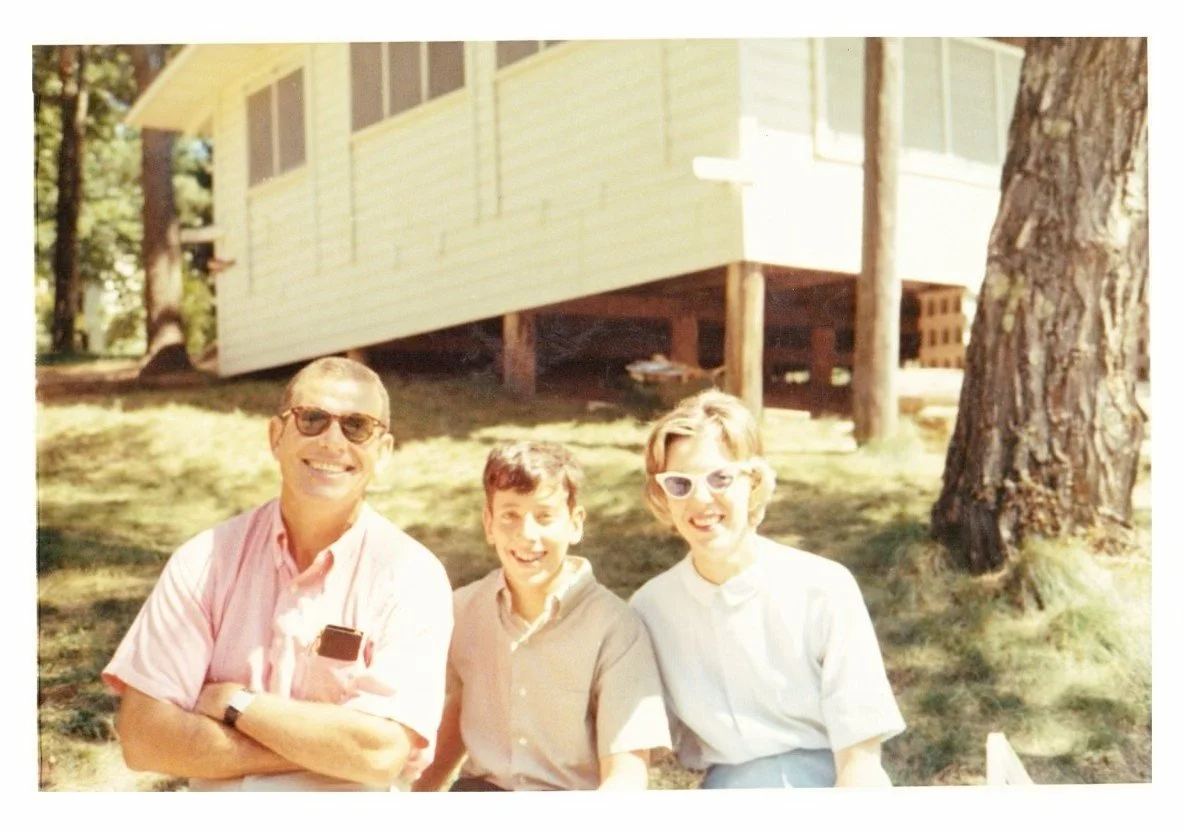
Clark with his father and mother. Photo courtesy of Clark Howard.
3. The Richest Life Is the One That Makes a Difference.
At just 23, years before launching Action Travel and achieving financial independence, Clark founded Career Action, an alternative school designed to help people who had not completed high school develop the skills and discipline necessary to become employable.
His father had experienced homelessness twice during the Great Depression and later founded a homeless shelter in Atlanta.
Clark admired his father's compassion but wanted to address the underlying problem by helping people obtain permanent housing.
In 1996, Clark and his wife sponsored their first Habitat home.
By the time we sat down together, they had sponsored 109 homes across the country.
As Clark described the program, I realized he was talking about the same principle that had motivated him to start Career Action in his early 20s.
"It's all about giving people opportunity, not giving them a home, not giving them a job, giving them the opportunity."
He wants to help people help themselves.
The same philosophy explains why, after decades of success in syndicated radio, he walked away from a profitable broadcasting model and embraced podcasting and YouTube.
He recognized that younger generations were not listening to traditional radio.
He wanted to reach people in their 20s and 30s, when the financial lessons he teaches could have the greatest impact on their lives.
Clark has the heart of a teacher.

Habitat for Humanity. Photo courtesy of Clark Howard.
And then there's Clark's Christmas Kids.
What began as a modest holiday gift collection at radio broadcasts from shopping malls has grown into an extraordinary effort to provide Christmas presents for more than 10,000 children in Georgia's foster care system.
Clark was quick to correct me when I credited him with founding the program.
The original idea wasn't his.
He helped carry it forward, expand it, and turn it into something much larger.
Not every meaningful contribution requires us to invent something new.
Sometimes we simply need to recognize something worth supporting and commit ourselves to making it better and take none of the credit.
The value of a gift isn't always measured by its price.
Near the end of our conversation, I asked Clark a question that had been on my mind since we began.
After 71 years, when had he felt the richest?
His answer had nothing to do with his net worth.
"I'd say right now with three fantastic children, two grandchildren, my wife, purpose in my life, fun all the time, and I control my schedule now."
It's the freedom to spend his time doing things that matter, surrounded by people he loves.
Those things matter. Financial security provides options and peace of mind.
Four decades later, he's still finding reasons to get out of bed and go to work.
Being rich and living richly aren't necessarily the same thing.
Learn more about Clark’s Christmas Kids here.

Photo courtesy of Clark Howard.
Listen to the Full Conversation
Coming December 7th.