
The Story We Inherit
Most of us are living inside a story we didn’t choose. We just haven’t stopped long enough to question it. In my conversation with John T. Edge about his memoir House of Smoke, five ideas surfaced that reminded me to revisit my own.
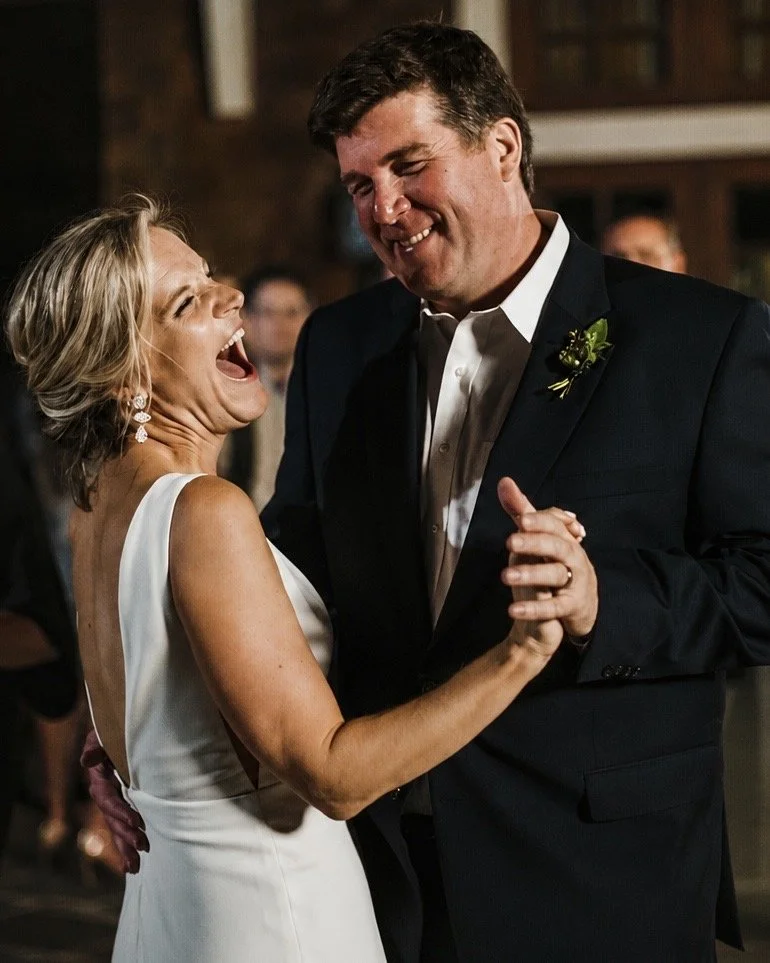
James & Amanda 2019
Even though we had volleyed a few emails back and forth prior to our interview date, including a full episode outline, I was anxious sitting at my computer waiting for his name to appear in the virtual waiting room. It was scheduled for 8am Central / 9am Eastern. He was in Oxford, I was in Atlanta. The voices in my head started to swirl around 8:57am.
This is ridiculous. What are you doing. He’s never going to show. You’re an idiot. Etc. etc. etc.
And then the notification appeared.
John T. Edge is in the waiting room.
“Well, shit… here goes nothing,” I thought to myself as I clicked “admit.”
I didn’t know what to expect from him. I was intimidated by the weight of his accomplishments. The more I read, the more I could relate to his journey on a search for purpose and identity.
I couldn’t believe he had agreed to meet with me. I reached out to him at the suggestion of a mutual friend, Matt. I did not reach out through Matt, nor did he make an introduction. The two of us were having dinner at City Grocery. He was asking me how everything was going with Retire Southern and who I might interview next. After dinner he showed me around the square. Before he got in his car to drive home, he said, “you really should interview John T. Edge.”
I laughed. Partly due to my lack of self-confidence and partly because I thought he was joking. He was not.
One major lesson I’ve learned on this journey is that you never know until you ask. So I went onto Amazon and purchased a copy of House of Smoke. Then I searched and found his email address online. Public information, plain as day. I sent him an interview request. I didn’t expect a response. And I didn’t get one, at first.
I waited two weeks and sent a follow-up. He responded the next day.
I was shocked. I said to my wife, “You are not going to believe this!” She had no idea who John T. Edge was, but she could tell it was important to me. She gave me the support she always gives me. That is just one of the many things that make Amanda so special.
He requested we meet online after I finished reading the book. Up to this point I had done almost all of my interviews in person. I didn’t want to press my luck. I was grateful to have the opportunity any way I could get it. I purchased a Riverside subscription for two reasons. First, it was advertised as a superior platform to Zoom and Google Meet for recording remote podcast interviews. Second, I didn’t want my most intimidating literary guest to date to think I was a complete hack. At least not before the interview started.
Outside of our email exchange, we had never met. But there he was, on my screen in real time. Soul patch and all. He had the most welcoming demeanor. His accent is hard to describe. It felt like a recipe handed down somewhere between South Georgia and the Mississippi Delta. His voice layered the warmth of Forrest Gump with the booming authority of Foghorn Leghorn.
I called him John and he corrected me immediately.
“Please call me ‘John T.’ It’s what friends and colleagues do,” he said.
Any fears or doubts I had evaporated almost instantly.
“Well, I’m honored to call you John T.,” I replied.
Looking back now I realize that I expected him to be more reserved or guarded at the start of our conversation. Probably because the opening scene of House of Smoke does not ease you in gently. The prologue launches into a horrific childhood memory. One he would later recognize as a pattern, trying to save his mother from harming herself. It is a powerful and emotional read. A cautionary tale about the importance of confronting two truths: who you are, and the consequences of your actions.
There are many insights in his book, and everyone will take something different from it. You get out of it what you bring into it. It depends on how open and honest you are with yourself.
There was a time I was not. A lot of therapy and soul searching have painfully brought that to light. It’s not pretty. It’s not fun. But it is liberating.
House of Smoke reinforced five primary themes from my own journey. I took advantage of the opportunity with John T. to go deeper into his story, hoping it might help me better understand my own.
THE STORY WE INHERIT
“You inherit something from the place and people… What do you do with them? How do you interrogate them?… What good do you do in the world?”
John T. says much of this book comes from the story he inherited, from the South and his family. The story told both inside and outside his home. He realized he has spent his life rewriting that story again and again.
And he is right.
I attended a personal growth seminar a few years ago. One of the prerequisites was to write your story. So I did. But working through the seminar, I realized what I had written was not my story at all. It was the story I inherited from my surroundings. My pre-seminar draft was a maximalized exaggeration of this person I thought I was, not my authentic self.
I rewrote that story during the seminar. This conversation with John T. was a reminder that we all need to revisit that from time to time.

courtesy John T. Edge
I WAS RUNNING
“So much of the life that followed that, was me running.”
I asked him early in the interview about the prologue because it was so intense. What did he remember feeling in that moment?
He recalled the scene. Chasing his mother out of the back door. The bang of the screen door. His feet hitting gravel. Running.
He spent the first part of his life literally running from his past instead of facing it. It was a pattern he eventually broke, but it wasn’t easy.
Most of us are running from something. We convince ourselves we are moving forward. But we are either avoiding something from our past, or something we are not quite ready to face.
I spent a lot of my life running and not realizing it. Mistaking motion for progress.
In order to see it, you have to stop and confront it.
SHARE THE UGLIEST MOMENTS
“If you’re going to write a memoir you’ve got to tell the toughest things. You’ve got to share the ugliest moments.”
In the final chapter, John T. makes the statement in reference to his mother, “The worst of her is forever in me. The best is too.”
The power of that realization stopped me in my tracks.
I have this ongoing delusion of writing a book, someday. Right now, in my mind, it is a collection of the best stories from the southern characters I have come to know while riding this Retire Southern train down the tracks. Collecting these stories has become my passion. Time and hindsight have taught me how the people who shape us stay with us.
When I asked him to elaborate on the worst and best of his mother being in him, he acknowledged that it was his mother’s positive qualities, her social skills and intellectual acuity, that empowered him to go from essentially flunking out of college to earning three degrees and founding a nationally significant food organization.
He acknowledged that this book would not have come to pass had it not been for her.
But in order to see that he had to bear down and embrace the suck.
He told me:
“I think part of our responsibility as we grow older is to figure out what to carry forward… and what to purposefully leave behind. That’s the whole gig, man.”
That is the real work. Not pretending the worst parts never existed, but also not allowing them to define you. Learning what deserves a permanent place in your story, and what does not.
SOMETIMES THE CHANGE COMES FOR US
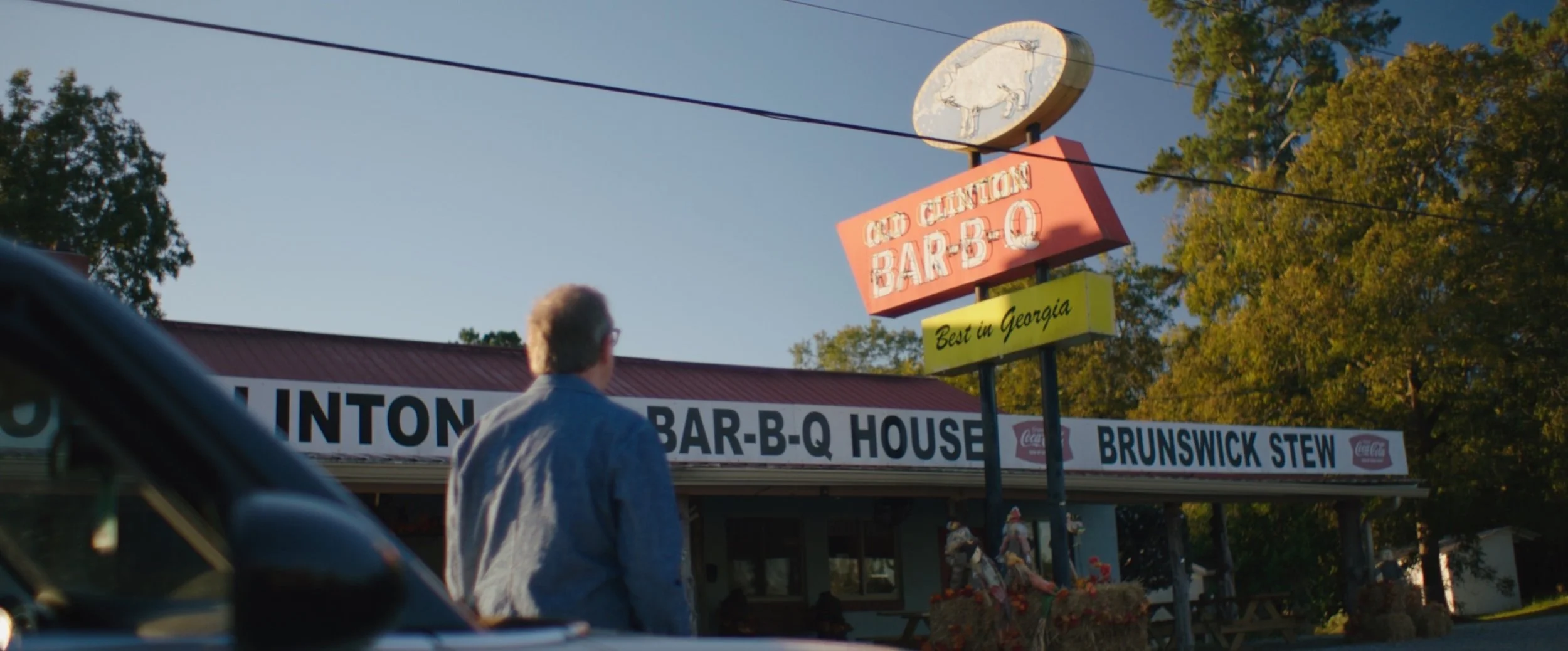
courtesy John T. Edge
“There are times I believe in our life when we need to make a change, and we don’t often know it. And sometimes the change comes for us.”
John T. founded the Southern Foodways Symposium in 1998. A year later, 50 founders came together to launch the Southern Foodways Alliance (SFA) at the University of Mississippi’s Center for the Study of Southern Culture. He was named SFA Director that same year. After 20 years of pouring his heart and soul into it, change came for him.
In 2020 he won the James Beard M.F.K. Fisher Distinguished Writing Award for his essay “My Mother’s Catfish Stew.” This was during COVID, on the heels of controversy surrounding the lack of diversity among James Beard Award winners and food writers.
The Beard Foundation hosted a webinar with John T. and Chef Tunde Wey that summer, “What is Food Writing’s Role in a Divided Nation?” The conversation was provocative. It was uncomfortable. Uncomfortable conversations are not pretty. They are not polite. But they do affect change.
Fifty-one minutes into it, Chef Wey called for John T.’s resignation. There was no middle ground. At the other end of the spectrum was John T. He was measured and reflective, but visibly on his heels. Eighteen months later, after developing and launching a new program at the University of Mississippi, he stepped away from the SFA.
When I asked him how he processed going from the high of winning a James Beard Award to the reckoning that ensued, he acknowledged how hard it was. But in his reflection he said that in the moment he was so blinded by hubris – his want to speak in a moment he didn’t need to speak – that the notion of proactively considering a change, like resigning his position as SFA director, was incomprehensible.
He did not come to that change. That change came for him.
While the moment was hard to endure, it became the prompt he needed to take a new path and write this book.
UNINTENDED CONSEQUENCES
“Good work, done with good intent, can have unintended consequences.”
I wholly believe John T. co-founded the SFA with the best of intentions. The organization’s vision states that the SFA works to put foodways at the center of dialogues about race, class, gender, ethnicity, and religion.

courtesy John T. Edge
After Hurricane Katrina, the SFA helped lead the effort to reopen Willie Mae’s Scotch House in New Orleans by organizing volunteers and providing labor. The effort became a symbol of the city’s rebuilding. But years later, when John T. returned to speak with Willie Mae’s great-granddaughter Kerry Seaton, he realized something he had not fully considered at the time.
Kerry had been studying to become an attorney before Katrina. She never intended to go into the restaurant business. But after the reopening of Willie Mae’s, that became the path her life took instead. She eventually found happiness in that work, but the transition was not easy.
And he played a role in that. His work, done with good intent, had altered the course of someone else’s life.
We spoke about a similar realization he had regarding Lusco’s in Greenwood, Mississippi. Through The Potlikker Papers and his work surrounding Booker Wright, John T. helped reshape the public narrative around the restaurant and its Jim Crow past.
Before Lusco’s closed in 2021, he returned to sit down with the Karen and Andy Pinkston. Not because he believed he caused the demise of their family’s restaurant, but because he recognized he had helped change the way people thought about it.
That was important to him.
He described walking into that conversation with his heart thumping in his chest.
But what struck me most was that he felt a responsibility to go back and have the conversation at all. To listen and take ownership in his role in the narrative. To be honest with himself and consider the possibility that his meaningful work left complicated consequences in its wake.
We need to ask hard questions on the front end, not just the back end. Especially in places that are not our own.
I struggle with purpose and identity on almost a daily basis. I suspect most of us do, whether we admit it or not. Ultimately, I want to be the best and most authentic version of myself. I want that for me, my wife, and our blended family. I try not to beat myself up too much for the mistakes I’ve made. But I do try to hold myself accountable for them. There is a phrase that Winston Churchill adapted from Spanish philosopher George Santayana.
Those that fail to learn from history are doomed to repeat it.
Recognizing destructive behavior usually doesn’t happen without a catalyst. And even when recognized, breaking that pattern is exceptionally difficult. The first step is taking a conscious look at the story we inherit so it doesn’t unconsciously become the story we live.
Listen to the Full Conversation
In this episode of Retire Southern, John T. Edge discusses House of Smoke, Southern identity, inherited narratives, accountability, and the stories we unconsciously live until we stop long enough to examine them.