
Maybe I Can Do That One Day
What Wes Moss taught me about the slow accumulation of change
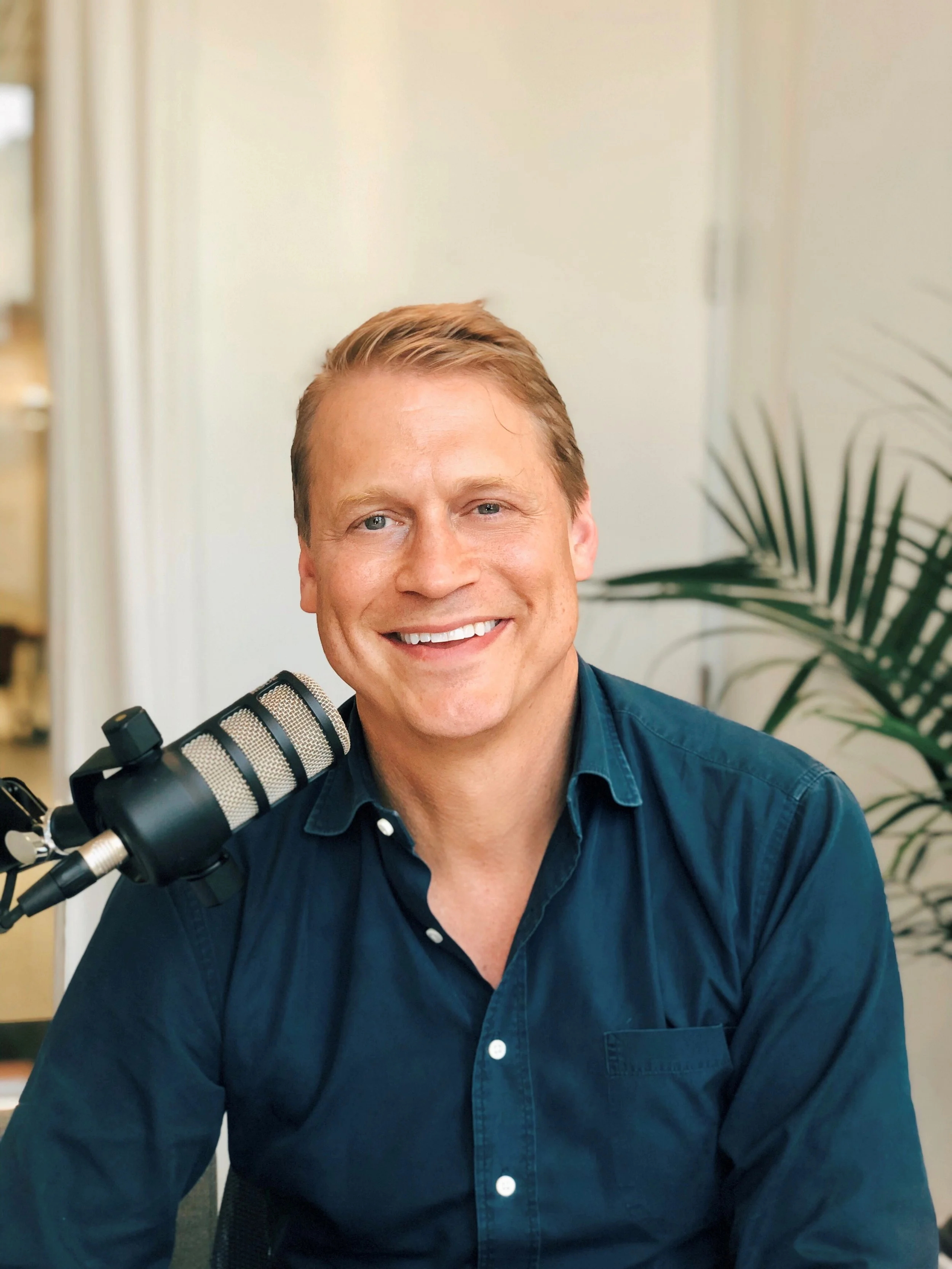
Photo courtesy of Wes Moss.
They are easy to spot in hindsight.
The little moments that changed the trajectory of your life.
Change rarely presents itself as some cataclysmic, all-in-one shift. More often, it is formless at first. A series of seemingly unrelated moments accumulating over time until, eventually, something pushes you over the edge.
Only then can you look backward and see the current that had been carrying you there all along.
I interviewed my longtime friend Wes Moss about his latest book, The Retire Sooner Method. I expected our conversation to revolve around the research behind the book and what he had learned from studying America’s happiest and unhappiest retirees.
But that’s not what I walked away with.
Instead, I inadvertently uncovered something far more interesting to me.
How Wes became Wes.
And how something that looks inevitable in hindsight was anything but while it was happening.
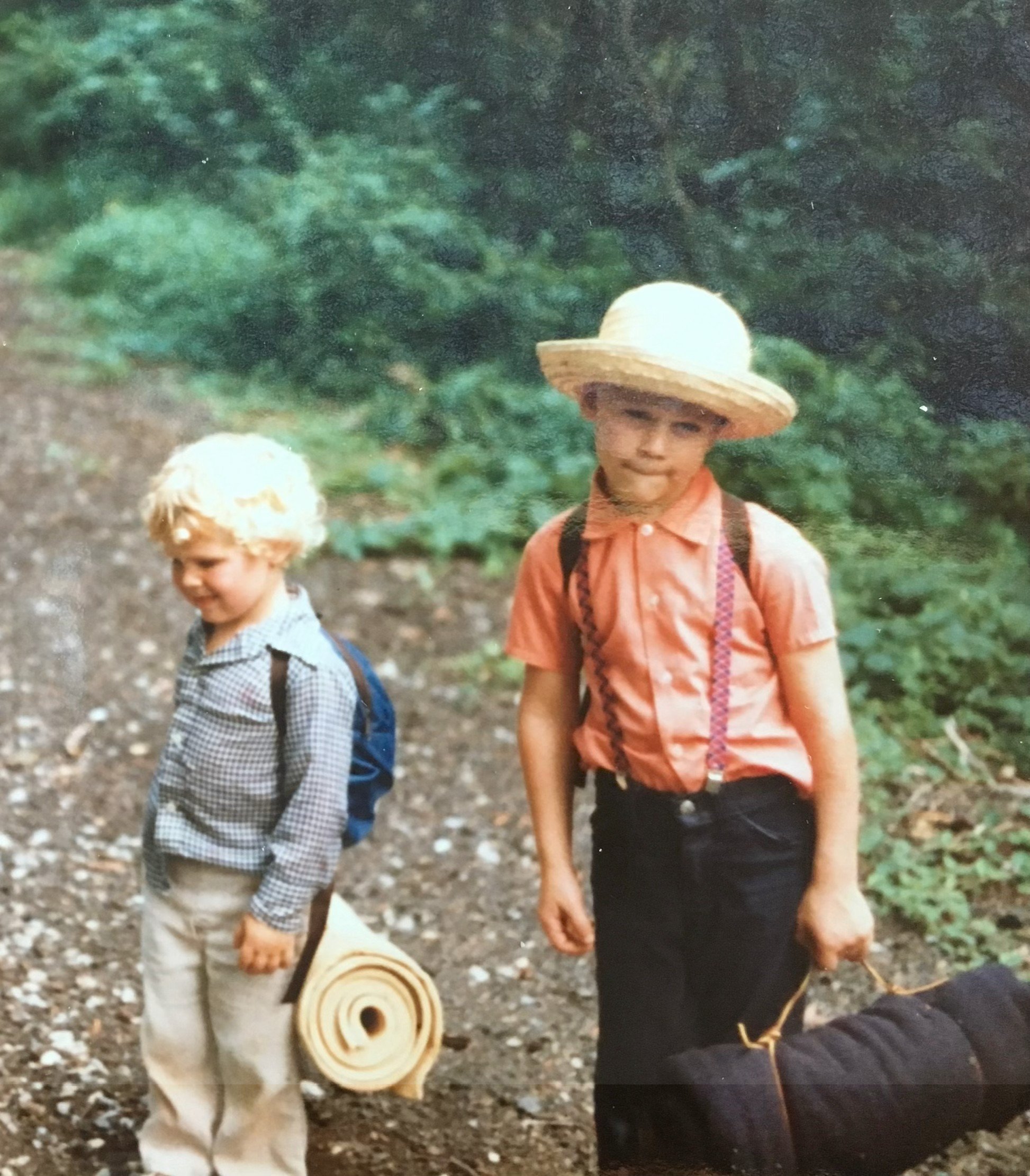
Wes Moss and his younger brother Brannan, long before radio, television, books, or retirement research entered the picture. Courtesy of Wes Moss.
Wes grew up in Lancaster County, Pennsylvania, home to one of America’s largest and oldest Amish settlements. His father was a large-animal veterinarian whose clients included Amish farmers throughout the area.
As a kid, Wes would ride along on farm calls in his father's little red truck.
While his dad worked, he waited.
And sometimes the Amish children would come running.
They weren't particularly interested in Wes.
They wanted the truck.
More specifically, they wanted the radio inside.
They would climb inside and ask if they could listen to talk radio or, God forbid, a song.
Wes remembers their fascination with it.
A voice coming through a speaker from somewhere else in the world.
He didn't realize it then, but that was a moment.
Years passed.
Wes left Pennsylvania for the University of North Carolina at Chapel Hill, studied economics, graduated, and eventually landed in Atlanta as a young financial advisor.
The radio showed up again.
On weekends, he listened to live financial call-in shows.
But he wasn't listening passively. He was studying them.
How is this guy going to answer this question? How does he know so many things?
He loved it.
And the more he listened, the more a thought began creeping in.
“Maybe I can do that one day.”
At this point, there was no grand revelation that changed the trajectory of his life. It was just a thought.
We tend to recognize change after it happens. We see the finished product, work backward, and connect the dots into a line that never existed.
But while you are living it, the dots just look like dots.
In 2004, Wes appeared on season two of NBC’s The Apprentice.
For someone who had spent most of his childhood around Amish farms and relatively little time in front of a television, reality TV offered a crash course in big media.
Radio was a thing. Television was a thing.
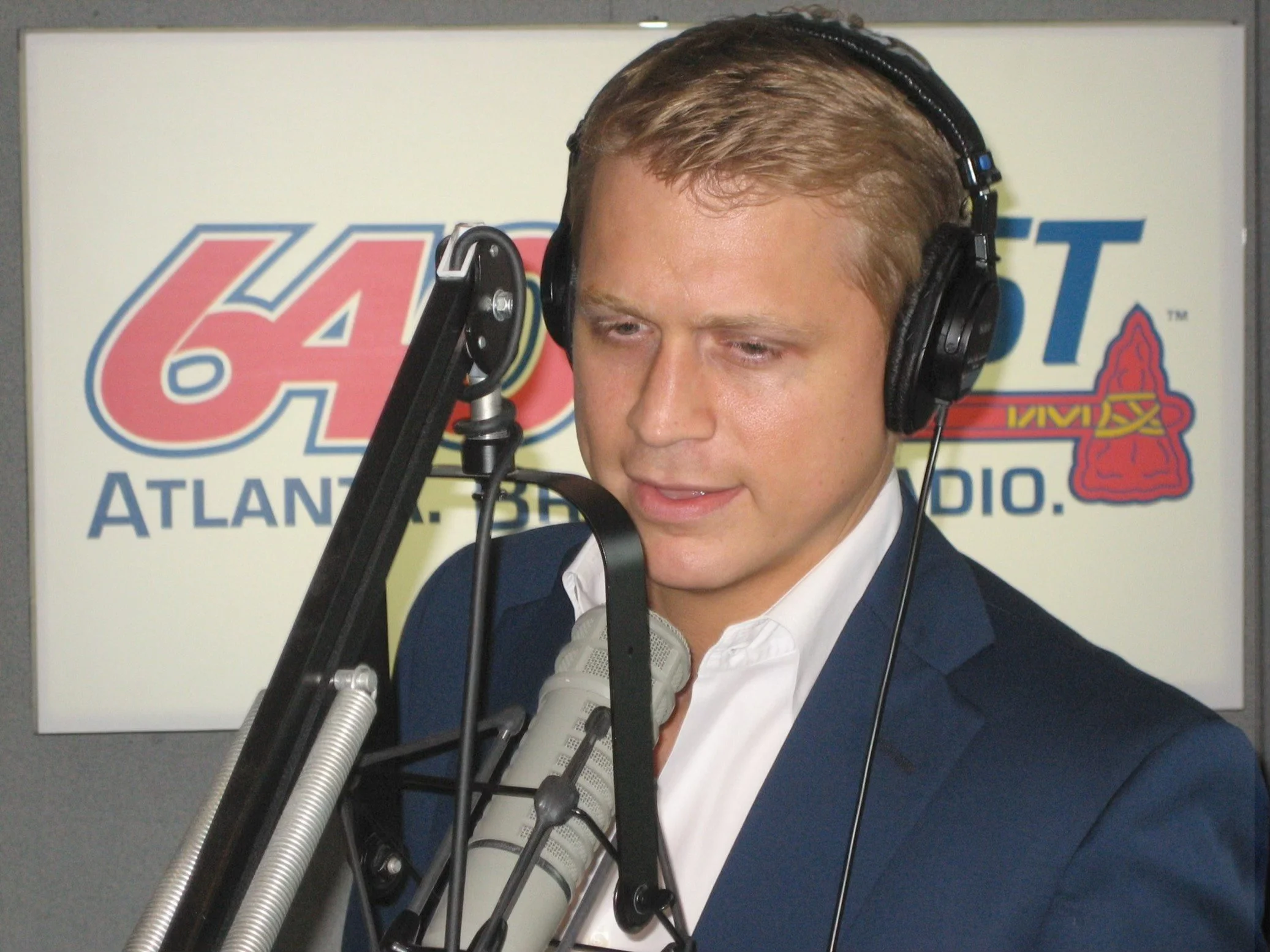
Wes Moss behind the microphone during his early days in Atlanta radio, 2007. Courtesy of Wes Moss.
The idea that had been quietly forming in his head didn't seem quite as ridiculous anymore.
A year later, Wes wrote his first book.
Starting From Scratch.
It wasn't about retirement and it wasn't about becoming a broadcaster.
It was about ordinary people who had taken a leap of faith and created significant wealth with an initial investment of $10,000 or less.
In hindsight, the title feels almost autobiographical.
Because Wes didn't just write Starting From Scratch.
He used it to start from scratch.
He took copies to radio stations around Atlanta. He mailed them to program directors. He walked through doors where nobody knew who he was and used the book as what he now describes as his own “legitimizer.”
The book didn't make him a broadcaster.
It gave him enough confidence to ask someone to let him become one.
Eventually, someone said yes.
Wes landed his first radio opportunity with WGST. By 2009, he was behind the microphone at WSB Radio in Atlanta hosting Money Matters.
The kid who once watched Amish children pile into his father’s truck just to hear the radio was now the voice coming through one.
There was no master plan connecting those two moments.
There was only accumulation.
Nearly two decades later, Wes has written four more books and spent much of his career behind a microphone.
Which is how we ended up sitting across from each other talking about The Retire Sooner Method.
The same pattern had repeated itself.
Wes simply wanted answers.
“The idea was not for a book,” he told me. “The idea was to go do research.”
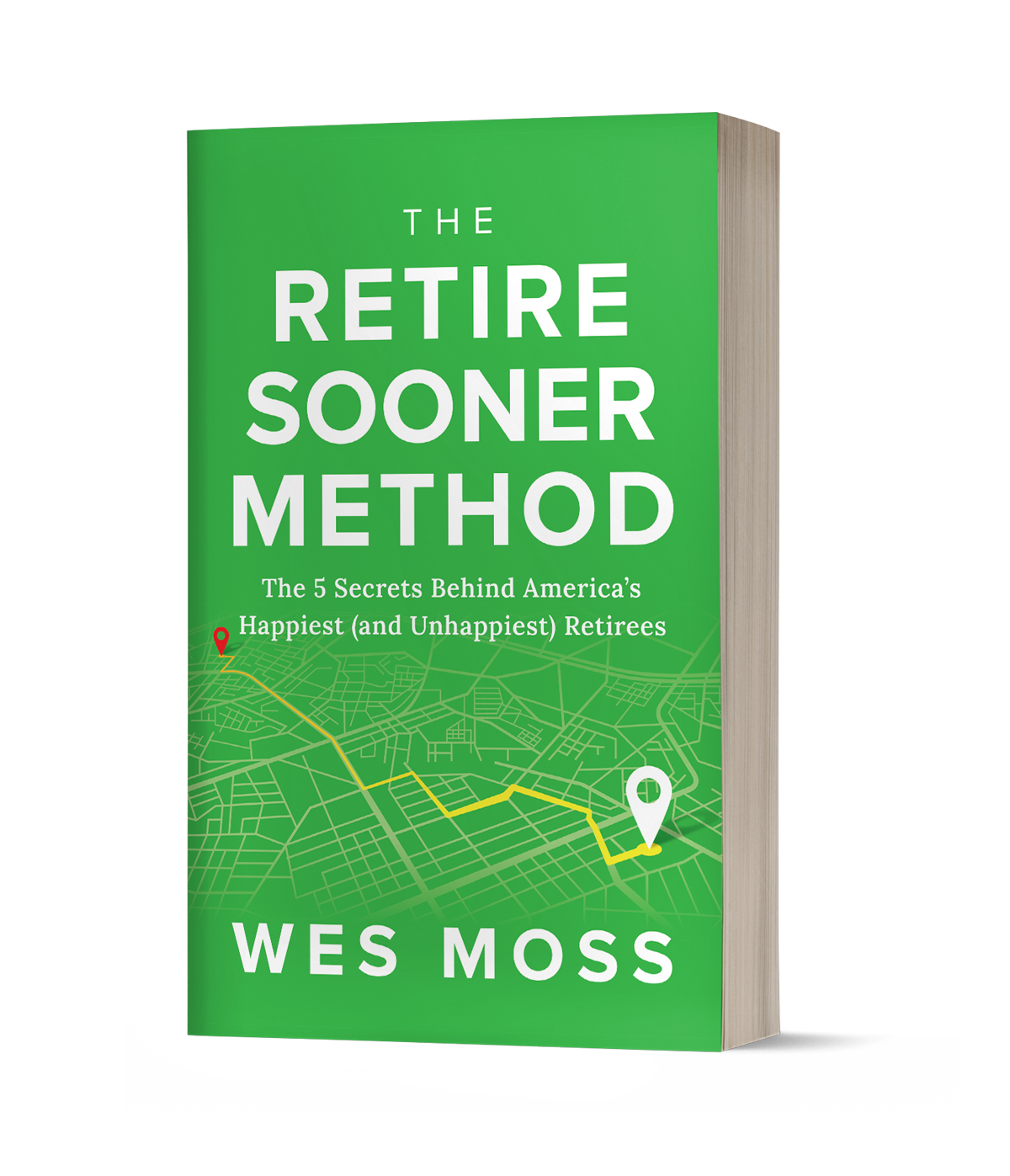
Want to go deeper?
Wes Moss’s new book explores the research behind what America’s happiest and unhappiest retirees do differently.
Another curiosity.
Another idea.
Another dot.
I've known Wes for more than 20 years.
I've worked with him. Played music with him. Watched him build a career, raise a family, write books and somehow keep finding new things he wants to figure out.
And yet it took this conversation for me to recognize the pattern.
Wes's story isn't really about knowing where you're going.
It's about paying attention to the things that keep pulling you somewhere.
I think we spend too much of our lives waiting for the moment.
The epiphany that suddenly makes everything clear.
Maybe change doesn't work that way.
Maybe it accumulates.
A song coming through the radio in your father’s truck.
A show you can't stop listening to.
A thought you can't quite shake.
A reality television show.
A book.
A few doors slammed in your face.
And eventually, one that opens.
Only years later can you look backward and see that what felt like a collection of unrelated moments was actually a current carrying you somewhere.
That's what I took away from my conversation with Wes.
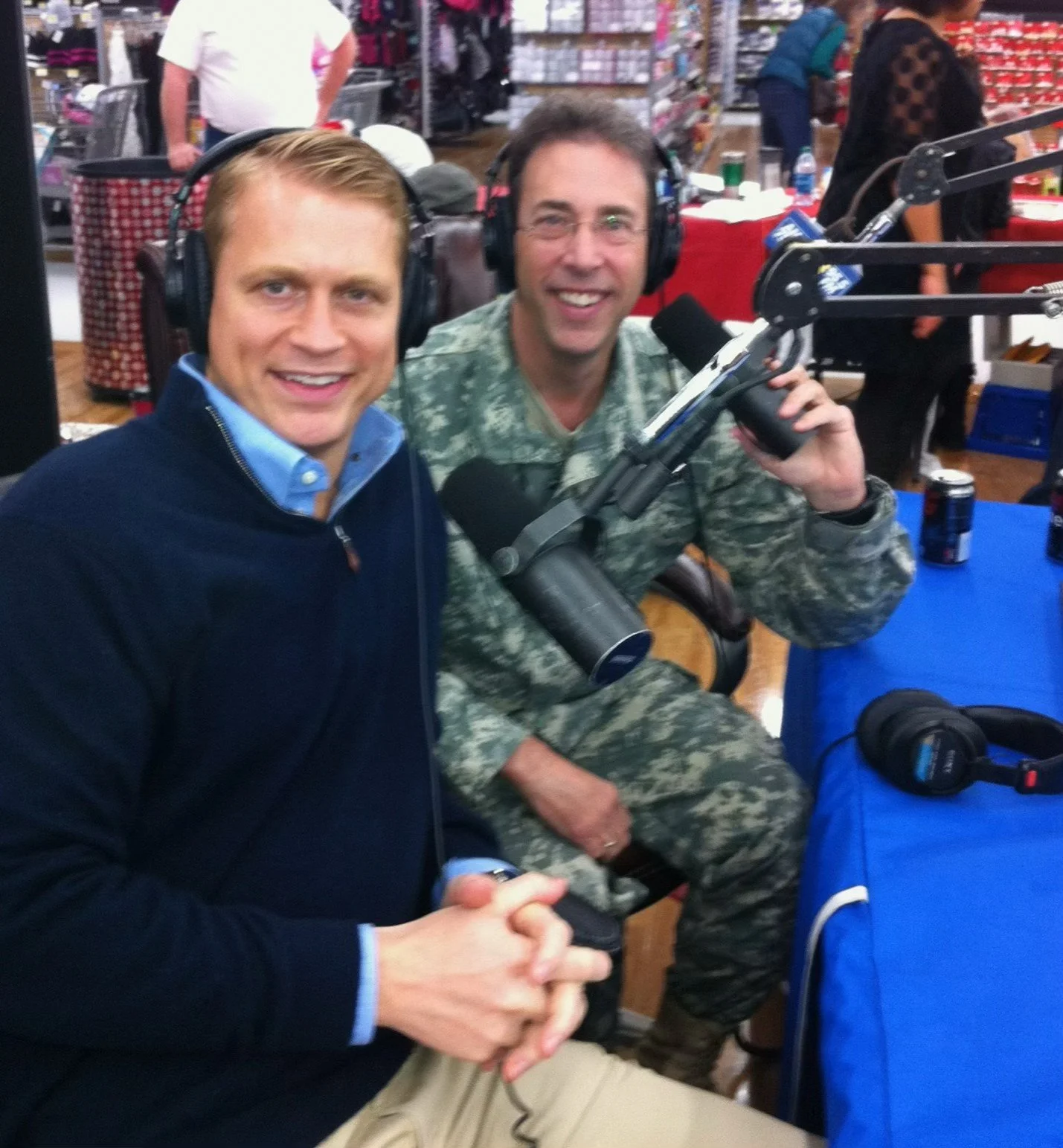
Years later, the microphone had opened doors Wes probably couldn't have imagined when he first sat behind one. Here he is with Clark Howard. Not Jerry Seinfeld. Courtesy of Wes Moss.
Change doesn't always announce itself.
Sometimes it whispers.
Maybe I can do that one day.
And sometimes that's enough to start.
From scratch.
Listen to the Full Conversation
Listen to my full interview with Wes Moss on the Retire Southern podcast coming September 21st.