
What Kevin Rathbun Taught Me About Building Something That Lasts
Five lessons on work, partnership, leadership, and passing it down
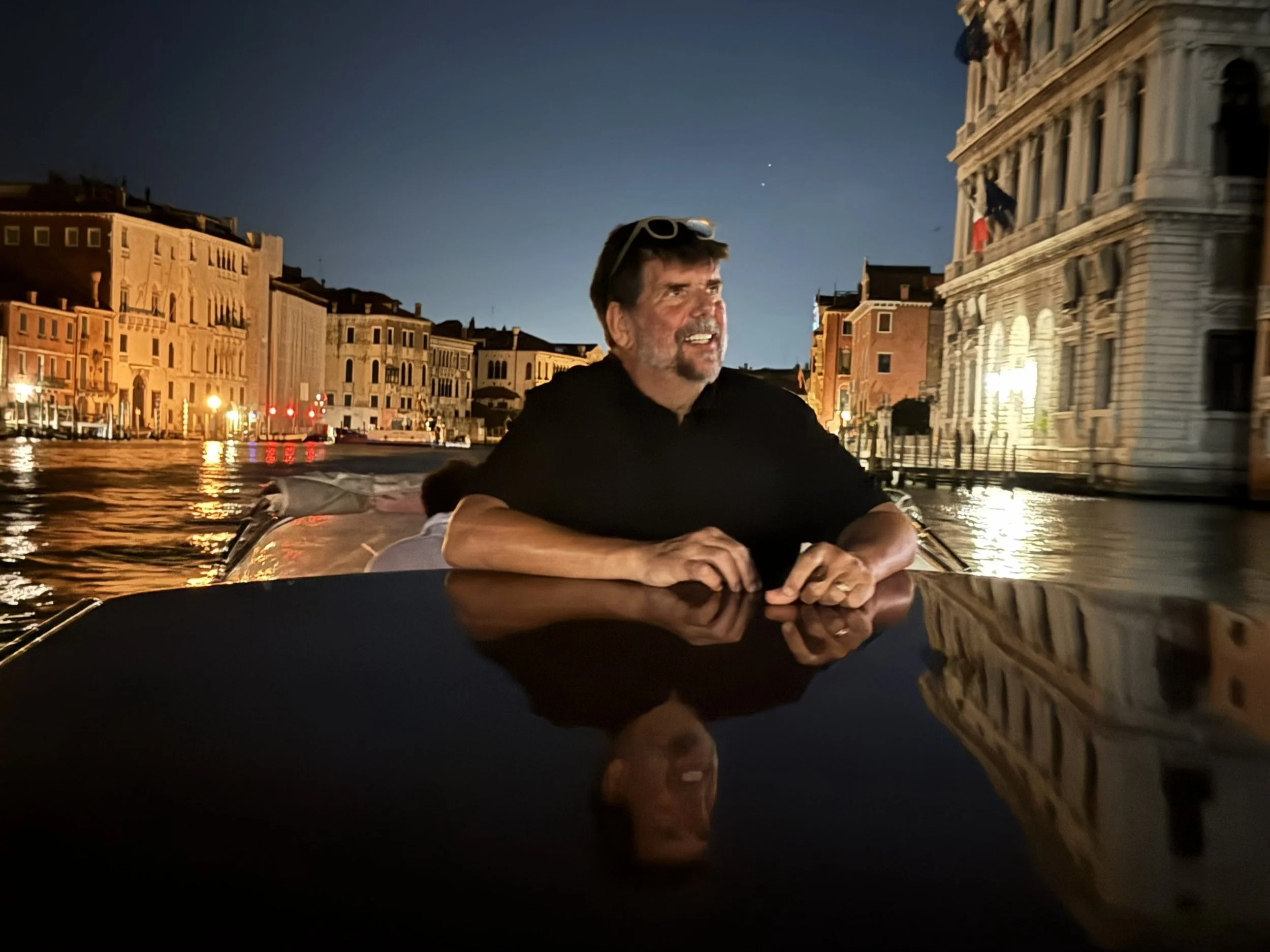
Chef Kevin Rathbun. Photo courtesy of Kevin Rathbun.
I called KR SteakBar looking for a recipe.
My stepdaughter was riding shotgun, half daring me to do it and half playing the part of the embarrassed teenager.
More specifically, we wanted to know what Kevin Rathbun put in the rub that had helped produce one of the best steaks we had ever eaten the night before.
The General Manager, John McDaniels, answered the phone.
I explained what I was after. He laughed.
“Well, Kevin just happens to be sitting right here... Why don’t you ask him?”
“Put me on speaker.”
A different voice came through the phone.
“This is Kevin.”
So I asked Kevin Rathbun for his steak rub recipe.
He laughed, too. Almost incredulously. I could practically hear him thinking: Who the hell is this guy?
The answer, of course, was no.
Kevin wasn’t giving me the recipe. But somewhere in the next few minutes, the conversation took a turn. He agreed to be a guest on Retire Southern. And if I showed up, he’d even give me some of the rub, gratis.
Not the worst outcome to a Hail Mary cold call looking for seasoning.
That phone call eventually put me in a booth across from Kevin at KR SteakBar for a conversation that lasted well over an hour. I expected to talk about steak, Atlanta restaurants, Bobby Flay, eggplant fries, and the jalapeño-pesto garganelli I order every time I walk through the door.
We talked about all of that.
But the conversation was never really about food.
It was about how to build something. How to treat people. How to recognize an opportunity before everyone else sees it. How to take a risk without losing sight of the numbers. How to work with the person you love. And how to make sure what you learn does not stop with you.
Kevin Rathbun is an Atlanta chef and restaurateur who has spent nearly half a century in the restaurant business. He has cooked beside some of the most influential people in American hospitality. He helped bring Southwestern cuisine to Atlanta, opened restaurants in places other people overlooked, beat Bobby Flay on national television, and helped shape how Atlanta celebrates birthdays, anniversaries, promotions, date nights, and everything in between.
My first impression was not celebrity chef.
It was welcome and gratitude.
Kevin made me feel as if I were sitting in his home, even though we were tucked into a booth inside one of his restaurants. He seemed genuinely grateful that I wanted to hear his story and pass it along.
That told me something before the interview really began.
Hospitality is not something Kevin turns on when a guest walks through the door. It is how he moves through life.
Here are the five lessons I carried home.
1. Come In Early. Stay Late.
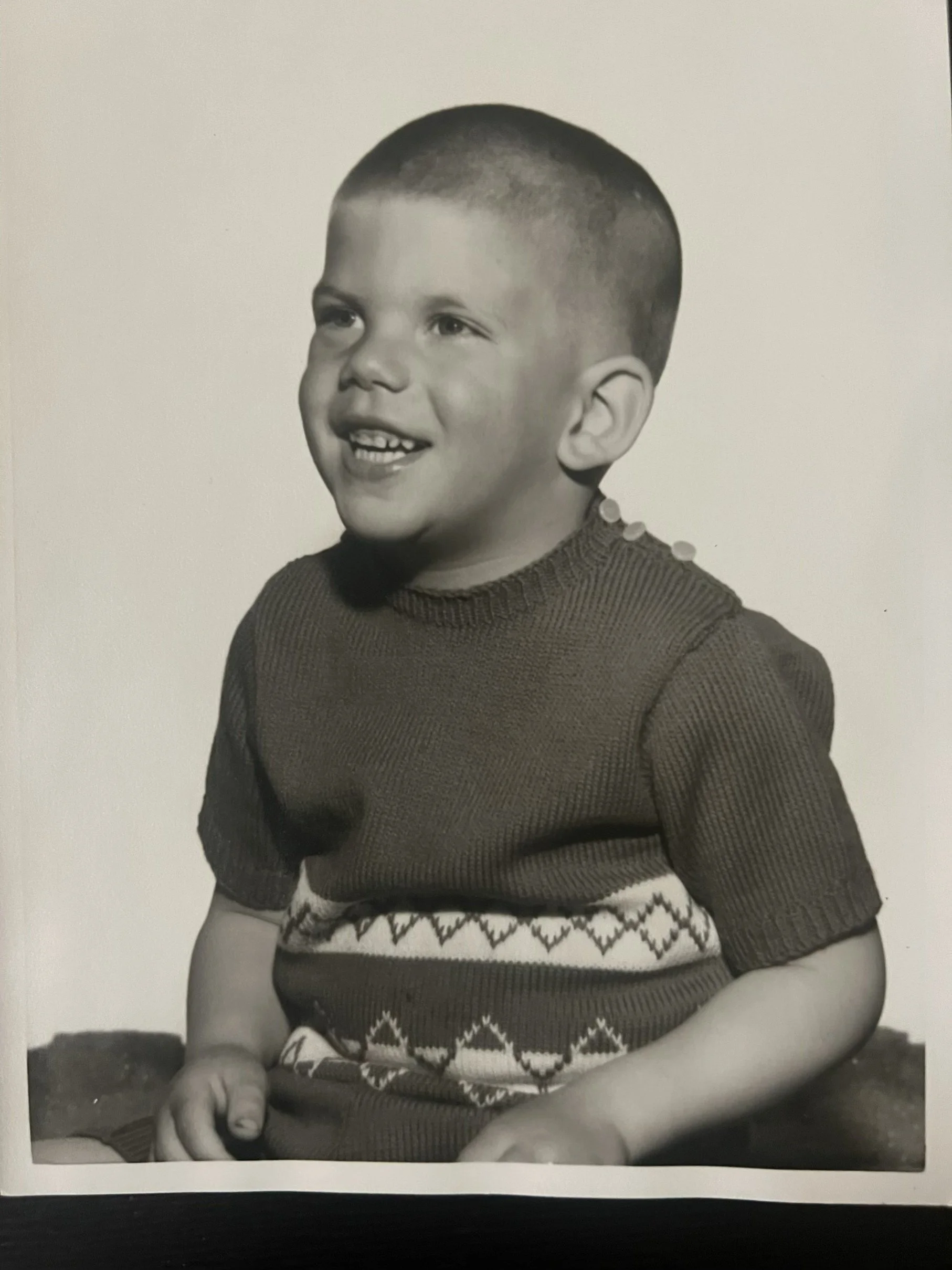
Kevin Rathbun, long before the kitchens and restaurants. Photo courtesy of Kevin Rathbun.
Kevin’s career did not begin beneath television lights or behind the broiler of a famous steakhouse. It began at Sambo’s, where he and his older brother, Kent, worked overnight shifts on weekends while they were still teenagers.
They went in at 10 p.m. and came home at six in the morning. They cooked eggs, fried chicken, burgers, roast beef, and just about anything else someone might order in a 24-hour restaurant.
Kevin summarized the education in three sentences: “We learned how to cook. We learned how to cook fast. We learned how to cook for drunks.”
By 16, he was moving through restaurant kitchens around Kansas City. Then Bradley Ogden called. Ogden was leading the American Restaurant, one of the city’s finest dining rooms, and had heard that the kid could cook.
Kevin became the sauté cook. He arrived early, stayed late, and absorbed everything he could: white truffles, white asparagus, beautiful fish, ice carvings, tallow carvings, and a level of cooking he had never seen before.
Within six months, Ogden asked when he would finish high school. Kevin was 17. The next day, Ogden offered to make him a sous chef and pay him $27,000 a year. That was the equivalent of a six-figure salary today. Not bad for a teenager with the ink still drying on his high school diploma. Soon he had a new car, a new apartment, and enough confidence to call his father and announce that he was moving out.
The restaurant also helped put him through a two-year hospitality management program at Johnson County Community College. But Kevin is clear about where most of his education came from.
It came from the kitchen.
The hours were not 12-hour days. They were 15- and 16-hour days. He kept showing up, kept watching, and kept learning.
That pattern followed him to Brennan’s of Houston, where he became a sous chef at 20. One person kept reappearing as Kevin climbed that ladder.
Chef Rex Hale.
Kevin first met Rex at the American Restaurant in Kansas City. Rex was the chef during part of Kevin’s time there, and when Rex moved on, Kevin worked his way into the opening he left behind. Kevin did not inherit the position simply because it was available. He came in early, stayed late, learned everything he could, and proved that he was ready for more responsibility.
Rex eventually called Kevin from Brennan’s of Houston.
He wanted the 20-year-old cook he remembered from Kansas City to become his sous chef in Texas. Kevin packed a U-Haul and went.
Then Rex moved on again.
When Brennan’s let Rex go, Kevin assumed he might be next. Instead of retreating, he doubled down. He helped the incoming chefs understand the kitchen, played well in the sandbox, and made himself indispensable.
Kevin did not immediately receive Rex’s title, but the way he responded to Rex’s departure created his next opportunity. The Brennan family noticed. Emeril Lagasse came to Houston, met with Kevin, and invited him to move to New Orleans and work at Commander’s Palace.
Before accepting, Kevin asked whether the company would pay him more and cover the move. Alex Brennan looked at him and said, “You’ve got a lot of balls. You’re sitting here on the firing squad and you’re asking for money.”
Kevin asked anyway.
He got the job. He moved to New Orleans. And he met Melissa, the woman who would become his wife and the other half of everything he eventually built.
Then Rex called again.
This time he was in Dallas, working with Stephan Pyles at Baby Routh and Routh Street Cafe. Rex convinced Kevin to leave Commander’s Palace and join him there.
About six months later, Rex left Baby Routh to return to the American Restaurant in Kansas City.
Once again, Kevin found himself staring at an opening Rex had left behind.
Once again, Kevin came in early, stayed late, and made himself impossible to ignore. While other candidates were interviewed for the job, Kevin kept running the kitchen and proving that he could handle it.
Eventually, the owners stopped looking elsewhere.
Kevin became the chef of Baby Routh and remained there for seven years.
Rex Hale never simply handed Kevin a job. He repeatedly showed him where the next rung of the ladder might be.
Kevin still had to climb.
Pano Karatassos recruited him to Atlanta to open Nava for Buckhead Life Restaurant Group. Kevin later became corporate chef, helping launch Bluepointe and Kyma while overseeing other concepts across the company.
Every stop added another layer. Cooking. Service. Numbers. Design. Leadership. Real estate.
Kevin did not jump too soon. He learned from people who knew more than he did, then stayed long enough to understand why their businesses worked.
“That’s what you do. Hire people that are smarter than you.”
The lesson is not simply to work longer than everyone else. It is to remain curious while you are there.
Come in early. Stay late. Sponge up everything.
2. Buy Dirt. Understand the Numbers.
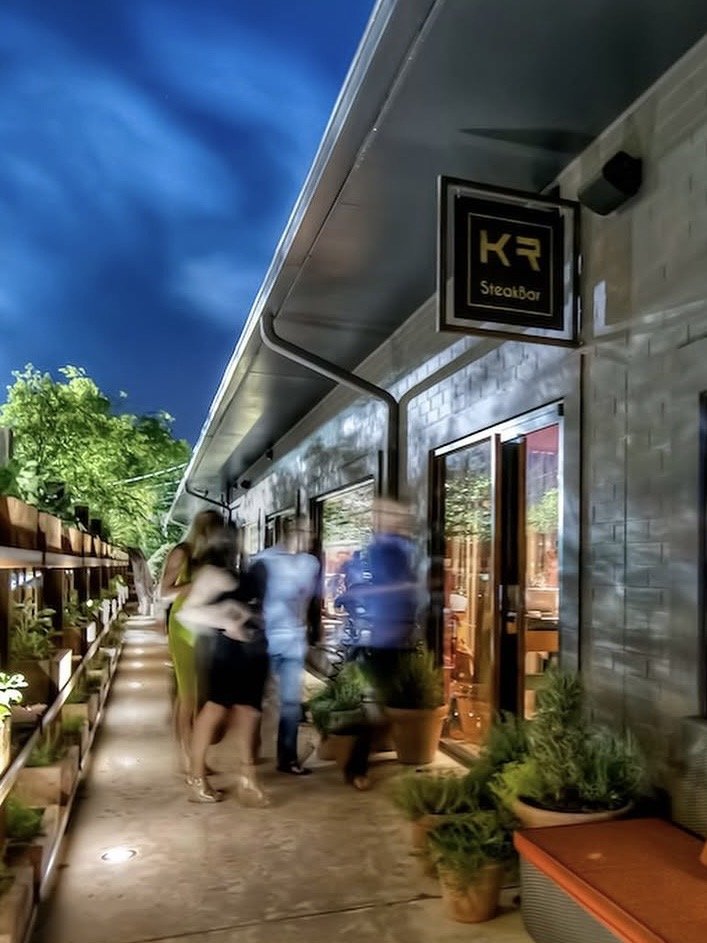
KR SteakBar in Atlanta. Photo courtesy of Kevin Rathbun.
Kevin’s second lesson arrived somewhere between a Crown Room conversation in Chicago and a cigar smoked alone in a car on Krog Street before sunrise.
While flying home from a research trip, Kevin asked Pano how old he was when he opened his first restaurant. Pano said 42.
Kevin was 39.
He decided he would have his own restaurant by 41.
He did not give Pano two weeks’ notice. He did not give him a month. Out of respect for everything Pano had taught him, Kevin typed a calendar reminder into Pano’s phone for one year later: “Fire Kevin Rathbun if he is still here.”
Four months later, Pano told him he needed to leave sooner rather than later. Kevin understood. His attention had shifted toward finding a restaurant, and Pano still had a company to run.
The push forced Kevin to move.
He wanted control. Not 5%. Not 10%. Not 20%. At least 51%.
That made raising money harder, but it also meant the risk and the reward would belong to him.
Kevin found the original Rathbun’s space in the old Atlanta Stove Works on Krog Street. The surrounding area was not yet the polished Beltline destination Atlanta knows today. It was industrial, obscure, and, in Kevin’s words, a war zone.
After putting down a $20,000 check, he called Melissa and told her they had a restaurant.
She drove down on a gloomy morning. The electricity was off. She walked inside, surveyed the room, and delivered her verdict: “Go get my effing money back right now.”
Kevin told her it was too late. They would have to give it a shot.
The first Friday brought 80 covers. Saturday brought 90. Monday had about 10 reservations on the books, and Kevin briefly wondered what he had done.
Within 30 days, the restaurant was serving roughly 400 people on Saturday nights.
Kevin had another contrarian belief working in his favor.
He is not a location-location-location guy.
He is a parking-parking-parking guy.
That philosophy might not play in New York or Chicago. But it matters in Atlanta, where people drive, avoid carpooling with almost religious conviction, and will circle a block three times before admitting that dinner may not be worth the trouble.
Kevin looks for obscure places with more parking than the city requires. Low profile. Plenty of parking. Give people a reason to come, then make it easy for them to stay.
His regret with Rathbun’s was not the location. It was that he leased the building instead of buying it.
He exercised every option and remained for 17 years, but the property changed hands repeatedly and the rent eventually reached a point where the numbers no longer worked.
Kevin had already applied the lesson a few hundred yards away.
In 2006, he made the deal for the former Clorox factory that would become Kevin Rathbun Steak. The restaurant opened in 2007, before the Beltline reached the property and before most Atlantans could imagine what the corridor would become.
It was a destination restaurant without prominent signage, sitting beside abandoned rail in a building that most people would have driven past.
Kevin bought the building, financed the project with a 20-year mortgage, and built a steakhouse for what he called, “the masses and the classes.”
Now the mortgage is ending, the building is his, and the real estate beneath the restaurant has become part of his retirement plan.
Buy dirt when you can.
And whether you buy or lease, understand the numbers before the numbers make the decision for you.
3. It Takes Two.
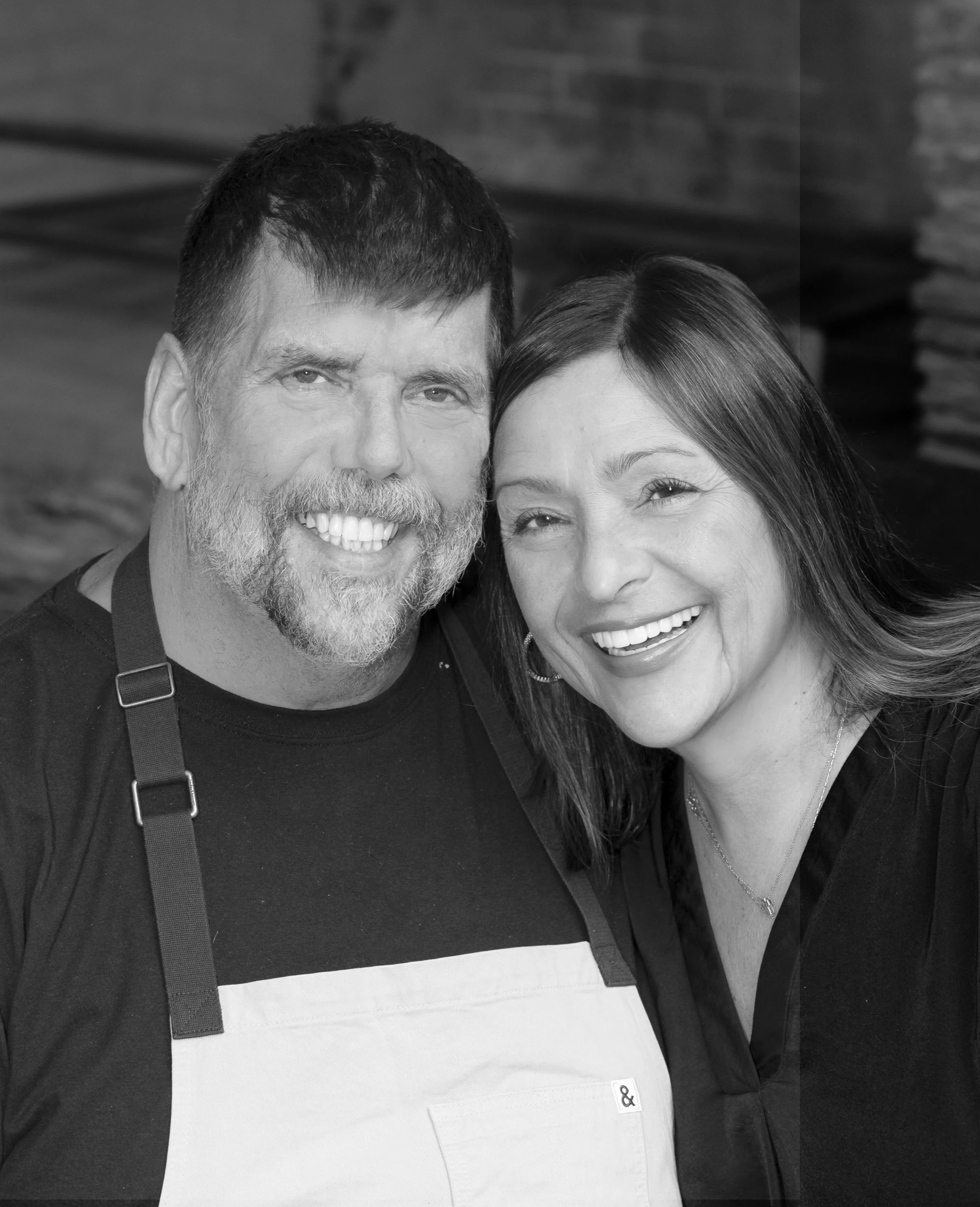
Kevin and Melissa Rathbun. Photo courtesy of Kevin Rathbun.
The Kevin Rathbun story is filled with partnerships, but none matters more than his wife, Melissa.
He met her at Commander’s Palace, where she worked as executive secretary for the Brennan family. Before Kevin ever arrived in New Orleans, the comptroller at Brennan’s of Houston spoke with Melissa every day to transcribe the numbers. He told Kevin he had to meet her.
Kevin found an excuse to visit the executive office and ask for help locating an apartment. She did not have much time for him at first. He kept trying.
They have now been together for nearly four decades.
Kevin is the creator. Melissa is the financial mind. He told me he has not balanced a checkbook since he met her. She dots the i’s, crosses the t’s, watches the money, and brings discipline to the part of the business that creative people sometimes prefer to ignore.
She also brings something harder to measure.
Everyone calls her Mama.
When an employee is grieving, struggling through a breakup, or simply having a terrible day, Kevin’s instinct may be to ask whether they are ready to get back to work. Melissa stops and asks what is wrong. She listens. She remembers. She cares.
Kevin builds the restaurant. Melissa helps build the family inside it.
Then there is his brother, Kent.
Long before the Rathbun brothers faced Bobby Flay on Iron Chef America, Bobby had spent a week working alongside Kevin at Baby Routh and another week with Stephan Pyles at Routh Street Cafe while preparing to open Mesa Grill.
Years later, Kevin met an Iron Chef producer at the South Beach Wine & Food Festival and asked a simple question: Had the show ever considered two brothers?
The producer called. Kevin called Kent. In 2008, the brothers walked into Kitchen Stadium for Battle Elk and beat their friend Bobby Flay.
They became the Flay Slayers.
It is a great television story, but it also reinforces the larger lesson.
Nobody builds anything meaningful alone.
Sometimes the right partner is the person who watches the books. Sometimes it is the person who notices when an employee is hurting. Sometimes it is your brother standing beside you beneath the lights with an elk between you and Bobby Flay.
Know what you do well. Find people who make the whole operation better. Then give them room to do it.
4. Treat Your People Right.
When I asked Kevin for the most important lesson Ella Brennan taught him, he did not talk about Creole cuisine, menu development, or the mechanics of running Commander’s Palace.
He talked about people.
Ella had employees who stayed 20, 30, and 40 years. They lived and breathed the Brennan name because the family treated them like part of something larger than a job.
Kevin remembered thinking that if he ever owned restaurants, he wanted to run them the same way.
“They’re not our employees. They’re our associates. They’re our family.”
Ella was not soft. Kevin described her as ruling with not one, but two iron fists. She expected people to do their jobs and do them well. In return, she paid them well, respected them, and created an environment where they wanted to stay.
High expectations and genuine care were not opposites. They were part of the same agreement.
Emeril taught Kevin another side of leadership.
When someone needed to be corrected, Emeril did not humiliate them in front of the kitchen. He brought them into the office and handled the conversation privately. Kevin watched him begin firmly, then bring the person down from the ledge and end softly.
Kevin was in his early twenties, but he recognized that he was being shown how to manage human beings, not merely cooks.
Decades later, that lesson still shows up in the way he talks about leadership.
He gives people a long leash. He does not want to fire them. He imagines everyone climbing a ladder together. If someone falls behind, he tries to pull them up.
“I’m a pull-up guy.”
The restaurant business is notoriously difficult. The hours are long. The margins are tight. The work is physical, emotional, and public. Mistakes happen where everyone can see them.
Kevin’s answer is not to lower the standard.
It is to help people reach it.
Do your job. Do it well. Treat people right. Pull them up when you can.
Simple does not mean easy.
5. Pass It Down.
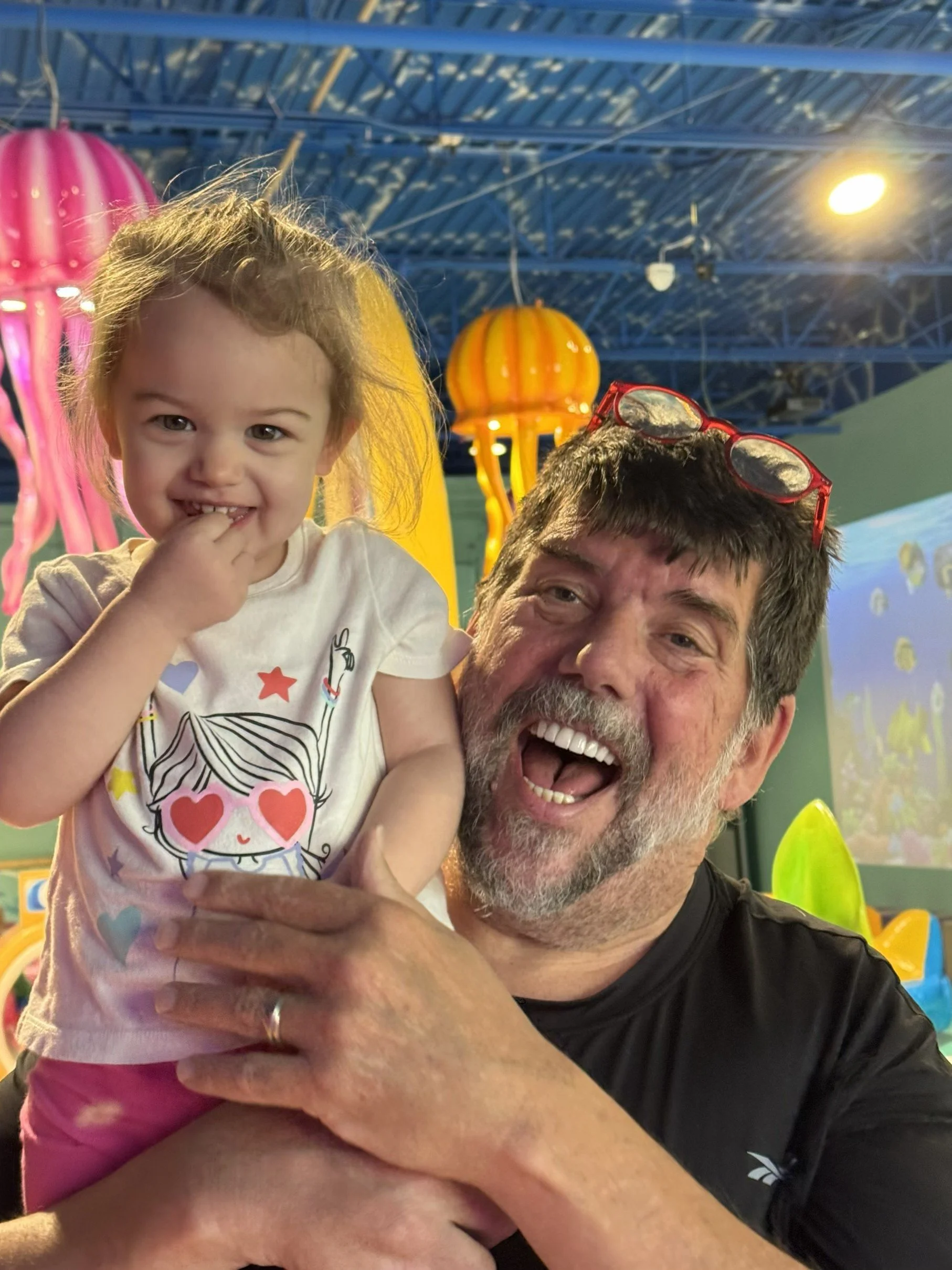
Kevin with his granddaughter Isabella, namesake of the Isabella pepperoni pizza at KR Coal Fired Pizza. Photo courtesy of Kevin Rathbun.
The interview existed because Kevin initially refused to pass something down.
I wanted the rub recipe.
He said no.
In fairness, I did eventually get the rub, just not the way I originally intended. I earned it.
What I got was better. A peek behind the curtain at how Kevin thinks about food.
Long before spinalis began appearing on steakhouse menus, Kevin was serving it at KR SteakBar. Most diners had never heard the word, much less ordered the ribeye cap as a standalone cut. Kevin worked with his meat supplier to separate it from the center of the ribeye, put its proper name on the menu, and trusted that people would discover why it was special.
Then he gave it another dimension.
The seasoning was inspired by a rub handed down from Maialino in New York. Sugar helps build the caramelized crust. Dried shiitake and porcini mushrooms introduce umami, the fifth taste. Then the spinalis hits KR SteakBar’s open hearth, where hickory and oak add smoke, char, and heat.
Most people may not have known what spinalis was when Kevin put it on the menu.
They know now.
That same curiosity eventually reshaped Krog Bar.
The original Krog Bar was a wine-and-tapas spot beside Rathbun’s. When Kevin revived the concept next to KR SteakBar, he preserved pieces of the original restaurant but reinvented the menu around coal-fired pizza.
Coal burns cleaner and hotter than wood, producing less smoke and the crisp, blistered crust Kevin discovered during a research trip to New York.
Even the menu carries a piece of his family forward.
The Isabella, a pepperoni pie topped with tightly cupped pepperoni, is named after his granddaughter.
Kevin’s basic steak advice is even simpler: Start with great meat. Bring it toward room temperature. Season it heavily. Get the grill hot. Build the char.
Then he added the line that may be the most useful cooking advice in the entire interview: “Bland food sucks.”
“This is not a hospital. Season the food.”
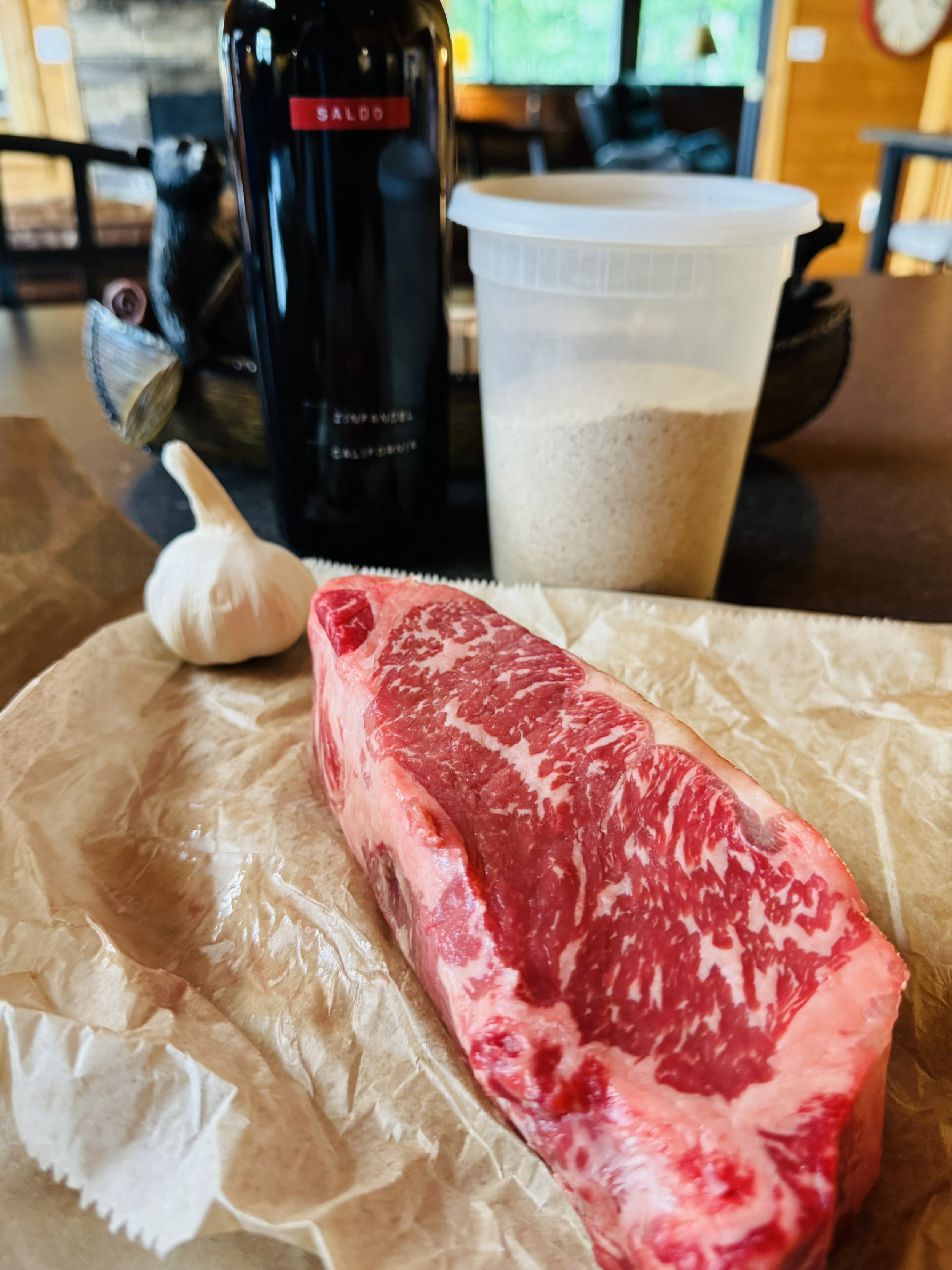
Prime steak, KR Steak Rub and a bottle of red. The Triple Threat.
The contradiction is that Kevin is far more generous with his knowledge than the rub story suggests.
For 20 years, he has hosted cooking classes that turn guests into participants. Teams prep courses, cook, serve, drink wine, make mistakes, and learn. Some guests have returned for 40 classes. The events sell out before most people know they were offered.
Kevin tells his chefs not to hide in the back and perform all the difficult work. Let the guests chop. Let them cook. Force them to participate. Teach them how to do it.
“Sharing is caring. Let’s pass down the love.”
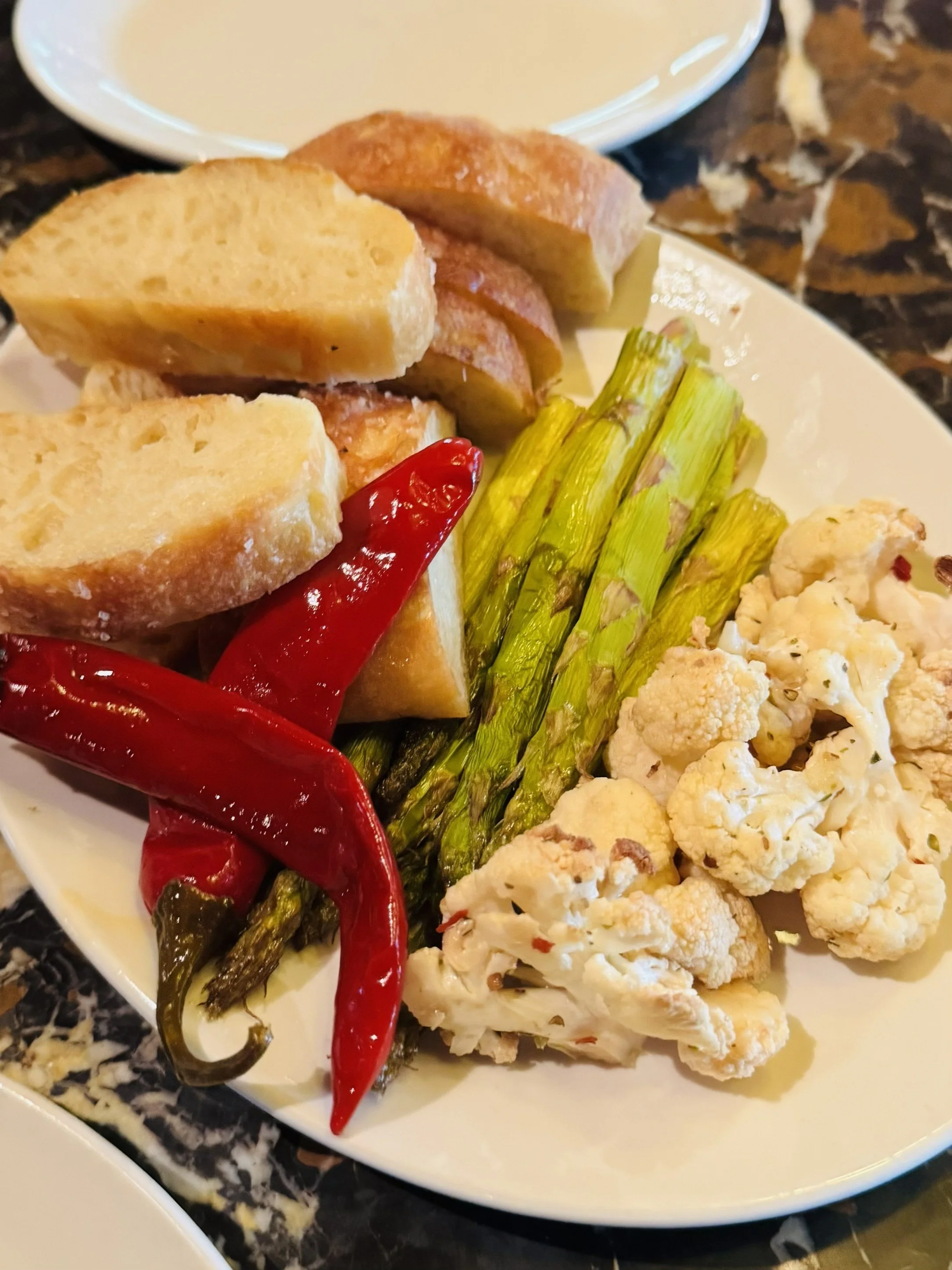
Crudités served with bagna càuda prepared by Kevin Rathbun.
He passed something down to me after the interview.
I had told Kevin about my Sicilian great-grandmother and the anchovy bread that remains one of my favorite food memories. In response, he made bagna càuda, a Piedmontese ‘hot bath’ of anchovies, garlic, extra-virgin olive oil, butter, and black pepper.
We sat down after the microphones were off. He served the warm anchovy bath with bread, vegetables, Calabrian peppers, and wine.
It brought a salty tear to my eye.
We finished the bottle. Then we opened another one.
That was not content. It was hospitality.
It was also a reminder that passing something down can take many forms. A recipe. A technique. A restaurant. A story. A standard. A chance.
For Kevin, it also means giving back.
At Baby Routh, owner John Dayton regularly approved Kevin’s requests to donate gift certificates and support community causes. Kevin kept asking permission until Dayton finally called him into the office.
‘I know who you are,” Dayton told him. “I know what you’re made of. You don’t ever have to ask me again to give away anything.”
Kevin never forgot the trust behind those words.
He has supported Project Open Hand for decades and used food to help children, families, and people who needed it. When I asked what he hoped people would remember after the last steak had been served and the dining rooms had gone quiet, he began with integrity and being good to people.
Then he talked about philanthropy.
That may be the clearest measure of what someone believes. Not what they accumulate, but what they are willing to give away.
The Real Lesson
People come to Kevin Rathbun’s restaurants for the food.
They come for the spinalis cooked over hickory and oak. The garganelli with jalapeño pesto. Yaya’s eggplant fries dusted with powdered sugar. The Isabella pepperoni pie blistered in Krog Bar’s coal-fired oven. The wine. The room. The celebration.
But that is not what they take home.
They take home the memory of where they sat when they decided to change careers. The birthday dinner in the Bureau. The anniversary toast. The work team celebration.
Kevin helped shape Atlanta because he understood that restaurants do more than feed a city.
They give the city places to remember itself.
That is what I learned from Kevin Rathbun.
Show up early. Stay late. Learn from people who know more than you. Own the dirt when you can. Understand the numbers. Choose partners who make you better. Treat your people like family. Pull them up. Pass down what you know. Give something away.
And start living while you still have time to enjoy it.
“You can’t pull a U-Haul behind a hearse.”
Listen to the Full Conversation
Listen to my full interview with Atlanta chef Kevin Rathbun on the Retire Southern podcast.