
Between Airplanes and Amplifiers: The Ballad of Frankie G
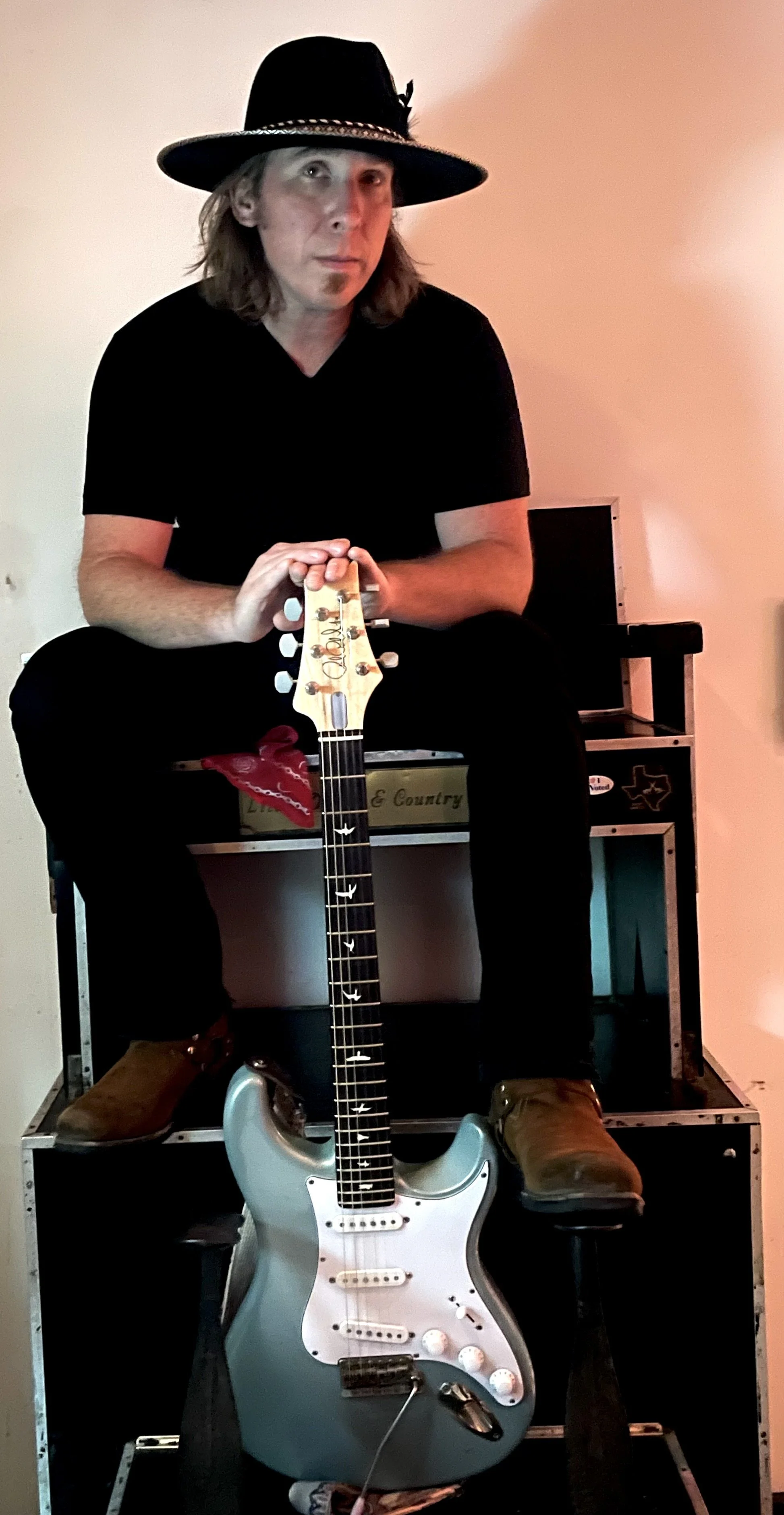
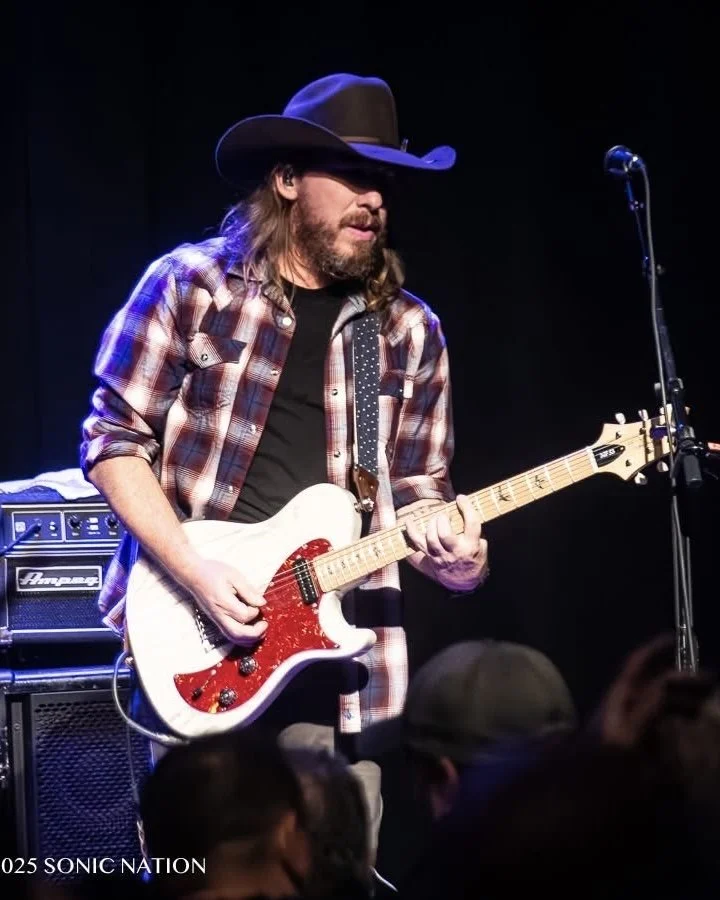
Frankie G is a professional guitarist, session guitarist, and touring musician best known for his work with Cowboy Mouth.
There’s a version of success we’ve all been sold. It’s loud. It’s front and center. It’s the name on the marquee. But every once in a while, you sit down with someone who reminds you there’s another way to build a life. One that doesn’t chase the spotlight, but somehow ends up standing right in it anyway.
That’s Frankie G.
Or Frank Grocholski, if you want to be formal. He won’t care either way.
We were sitting on the front porch at Rock ’n’ Bowl in New Orleans, the kind of place where music doesn’t just happen, it rolls a turkey and plays a set. If you’ve never been to Rock ’n’ Bowl, there’s a lot of history there. In fact, it’s a whole other story I could do an entire feature on. But if you’re thinking it’s “just a bowling alley,” you would be incorrect.
Rock ’n’ Bowl originally opened in 1941 as Mid City Lanes. What it’s become since the late 1980s, thanks to John Blancher, is something entirely different. It’s part venue, part time capsule, part proving ground for musicians who understand what it means to play in this city. Rock ’n’ Bowl almost feels like Tipitina’s, if you added bowling lanes and took away the balcony. Its roots run deep, like the oak trees that line Carrollton Avenue.
The walls tell the story. Covered in autographed photos and posters from the legends who’ve played that stage. You don’t just walk into Rock ‘n’ Bowl. You walk into half a century of New Orleans music. And above it all, watching over the room, is the shrine to the Sacred Mother. It’s not subtle. It’s not supposed to be. It’s New Orleans.
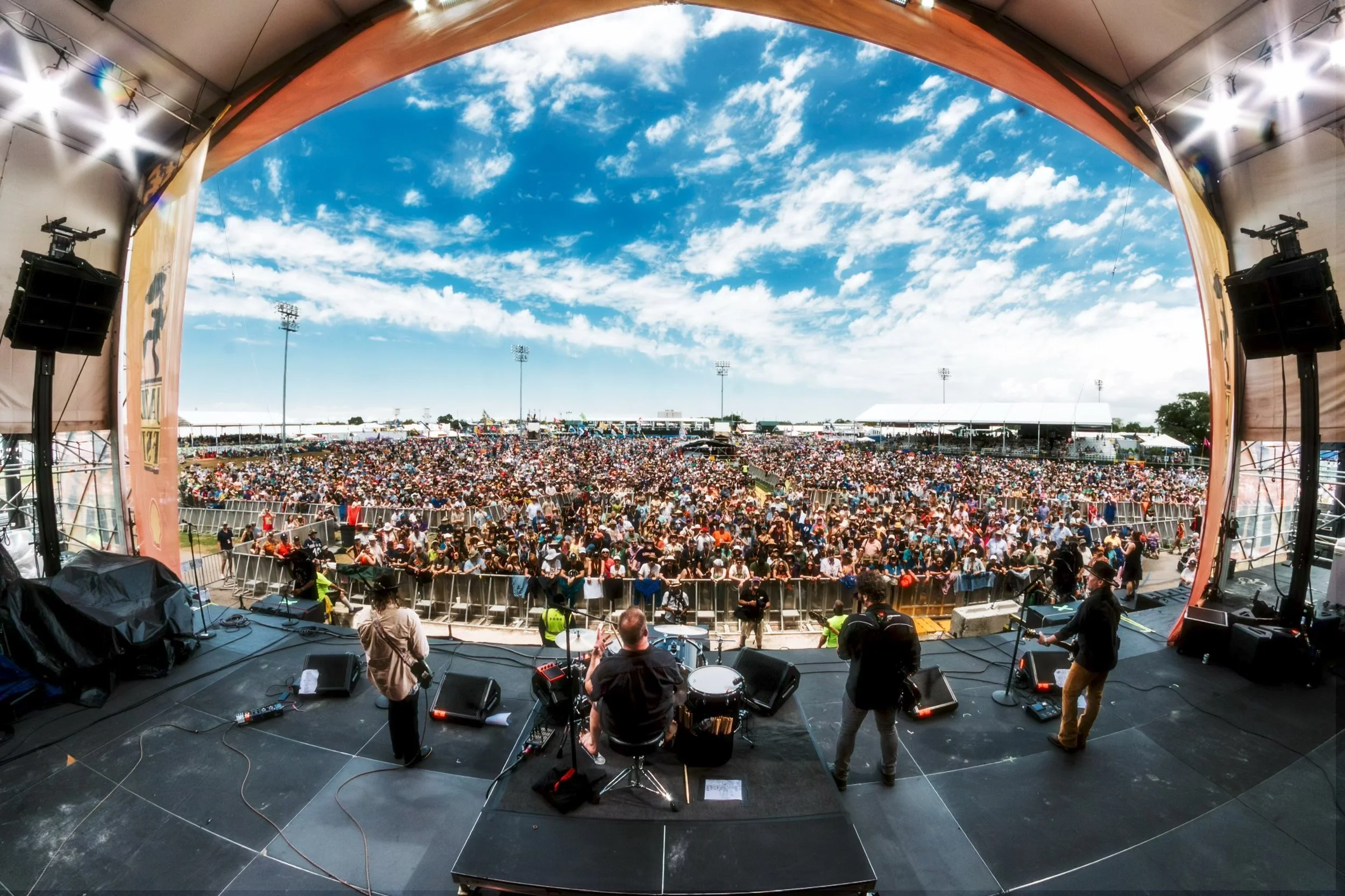
The day before, he’d just come off stage at Jazz Fest. Thirty-five straight years for Cowboy Mouth. Thirty thousand people. Generations in the crowd. Parents, kids, grandkids. All singing the same songs. And there’s Frankie, not the original guy, not the headliner, not the one whose name you’d recognize first. But he’s the one who got the call. And more importantly, he was ready for it.
The Guy Who Gets the Call
Frankie’s story doesn’t start in New Orleans. It starts in New Jersey, just outside Asbury Park. Bon Jovi country. His first concert was Skid Row, Trixter, Bon Jovi in 1988. He was five years old. His first guitar came even earlier. Three years old. While most of us were figuring out how to tie our shoes, Frankie was figuring out chord shapes.
There was no roadmap for it. No YouTube. No tabs. Just three tapes and time. Nirvana. The Beatles. Metallica. He sat there and wore them out, rewinding, replaying, figuring it out by ear until the tape stretched thin. That’s not talent. That’s obsession. And that is where this story starts.
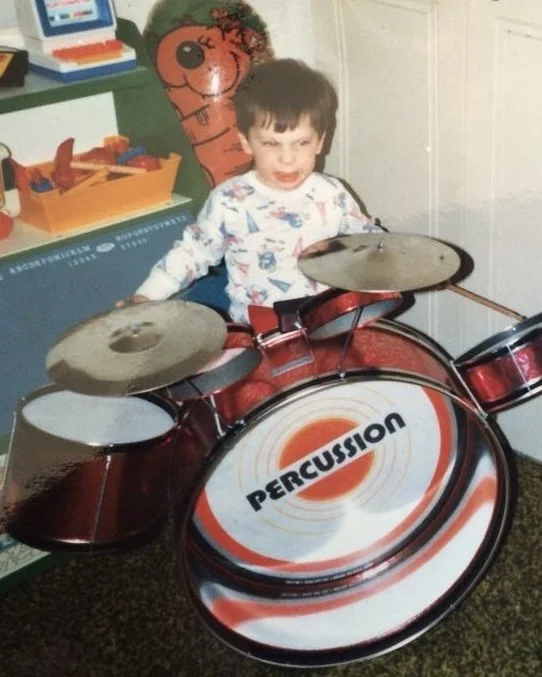
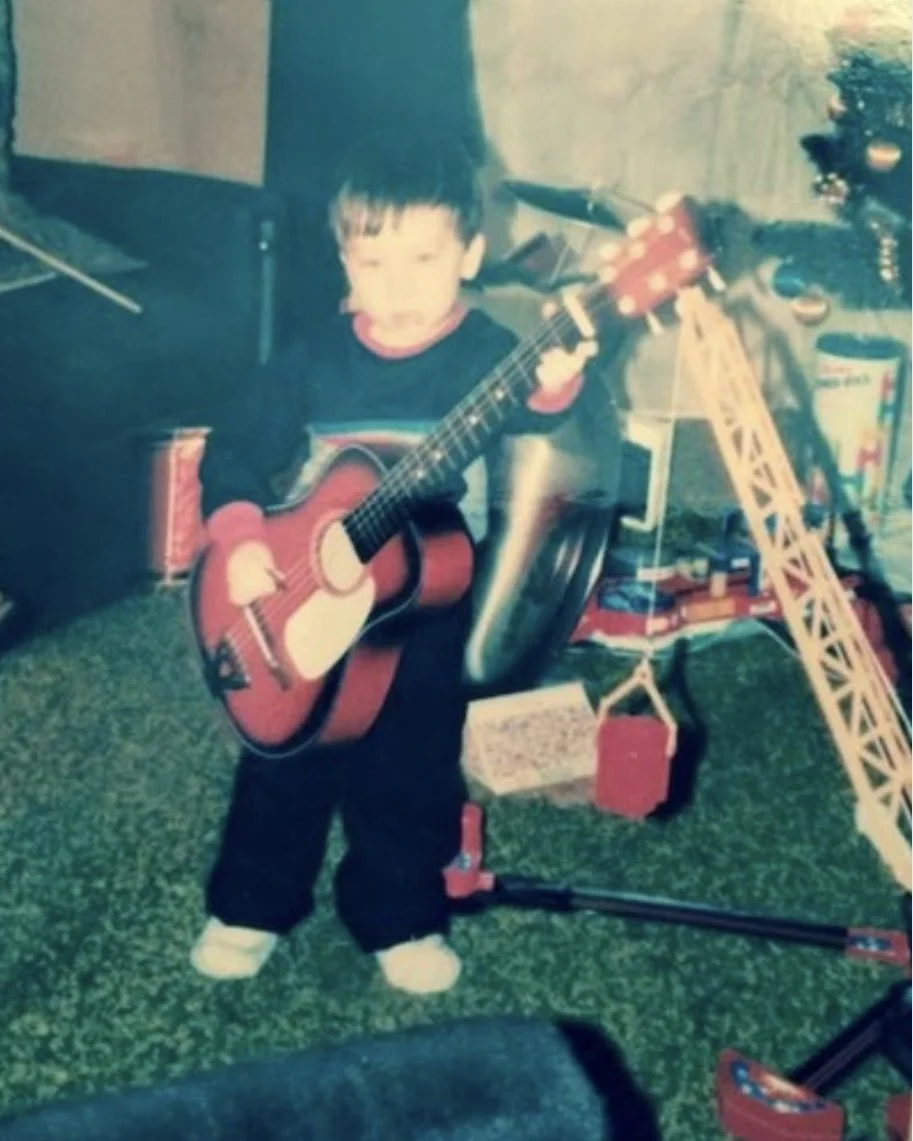
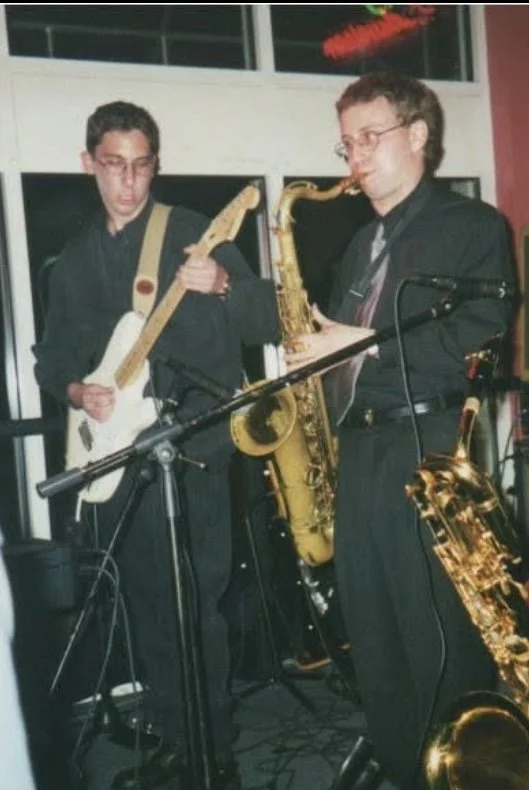
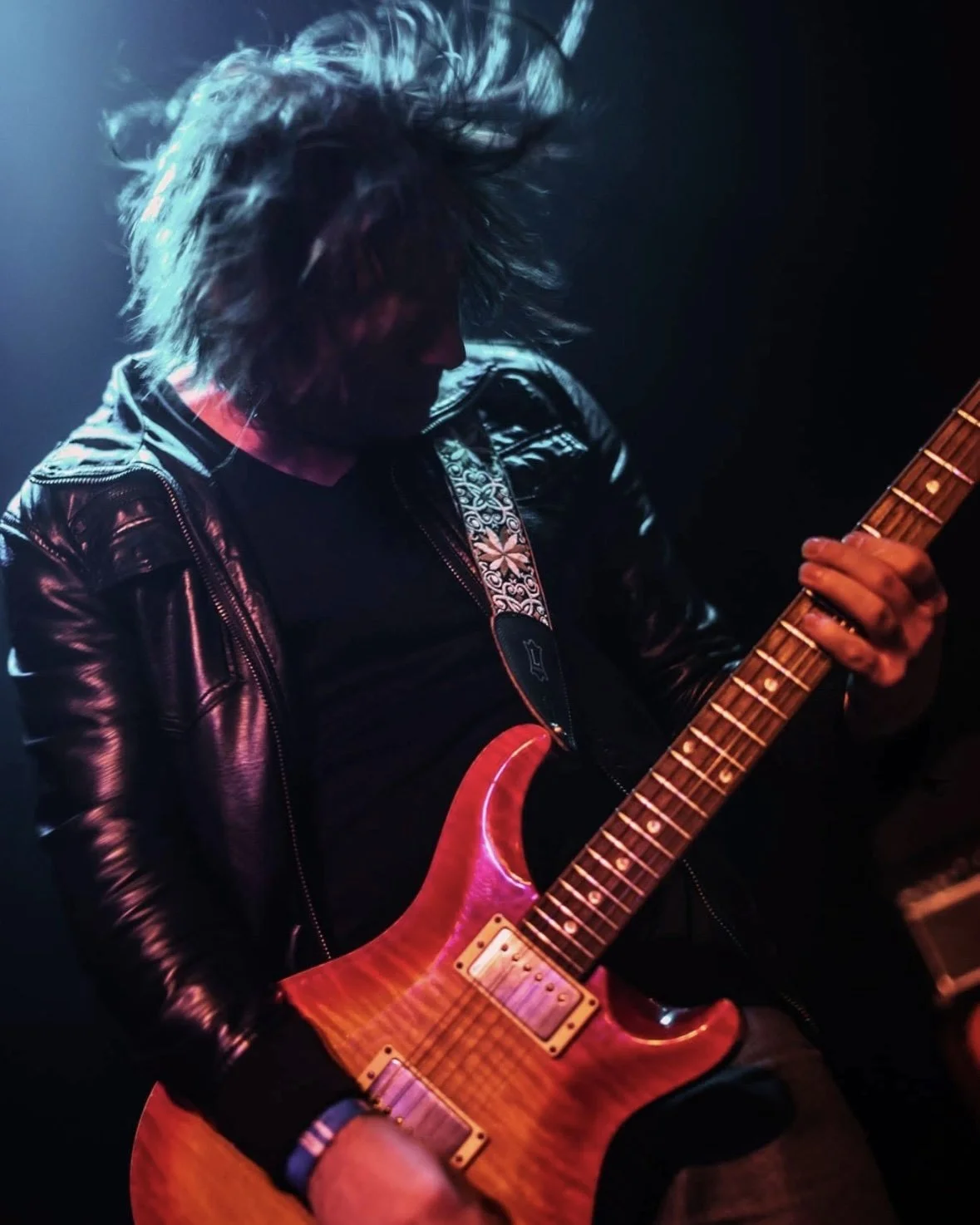
At one point, he tried to do it the “right” way. Auditioned for the high school jazz band. Couldn’t read well enough. He tried to fake it, but he didn’t make the cut. So he spent an entire summer learning how to read music. Came back better. Still didn’t make it. For a lot of people, that’s the moment the story changes direction. For Frankie, it didn’t. He was already playing gigs. Already building something real. So he just kept going.
By the time most kids are figuring out college, Frankie was already skipping it. He got into Berklee College of Music in Boston, but didn’t stay long. A band offered him a salary, a tour in Europe, and a shot. So he took it. Before he was 20, he was opening for Pantera, traveling, living the life most people only talk about. And then, just as quickly as it came together, it fell apart. That’s the part nobody glamorizes. But it’s the part that builds character.
Because somewhere around age 13, he had already made the decision. He didn’t just want to be the guy. He wanted to be the guy behind the guy. The session player. The one who walks into a room, plugs in, and makes everything better. The one who helps someone else’s vision come to life. That’s a different kind of ambition. Less ego. More craft.
And it requires something most people don’t have. Consistency.
When Frankie got the call to fill in for Cowboy Mouth, he didn’t just learn the songs. He studied them. Thirty songs in a matter of days. Charts. Notes. Tones. Effects. Down to the smallest details that most people would never notice. Because in his world, “good enough” doesn’t get you invited back. Prepared does. Reliable does. Consistency does.
Before he ever stepped on stage with them, there was a test. A hotel room in Minnesota. No crowd. No lights. No safety net. Just Frankie, a guitar, and frontman Fred LeBlanc.
He played “Jenny Says.” Then half of “Believe.”
That was it.
I asked him if Fred showed up in a silk robe or a smoking jacket like some kind of late-night casting call. He laughed. Just Fred being Fred in a sleeveless shirt and a pair of shorts. But all kidding aside, that moment mattered. Because if that meeting goes the other way, if something’s off, if the preparation isn’t there, that’s a very quiet, very long flight home from Minnesota.
When Preparation Meets the Moment
Standing in that crowd at Jazz Fest, you could feel what that kind of work builds over time. Not just music, but connection. You’d look around and see three generations singing the same song. That doesn’t happen by accident. That’s decades of showing up. Doing the work. Earning it. Frankie wasn’t the focal point of that moment, but he was part of it.
And so were his mom and his fiancée, watching from the front of the stage. When the set ended, his mom was the first one to hug him. She’s been there since the beginning. His biggest fan. His biggest supporter. The one who helped him get his first Strat. The one who stood by him through the bar band years, the uncertainty, the figuring it out.
“She’s been seeing me do this for a while,” he told me. “From bar bands to struggling and figuring it out… so it’s pretty amazing for her to see. It’s paying off.”
A Life Built Between Airplanes and Amplifiers
These days, he lives just outside of Waco, Texas. He describes it as, “city adjacent.” Not in the thick of it, but close enough to an airport to get wherever he needs to go. Because his life is still lived between airplanes and amplifiers. One night it’s Jazz Fest. The next it’s a hotel room, laptop open, tracking guitar parts for a session halfway across the country. The next morning, he’s teaching a student over video, breaking down a riff, helping someone else find their way. Hundreds of students at this point. Some of them going on to do exactly what he does.
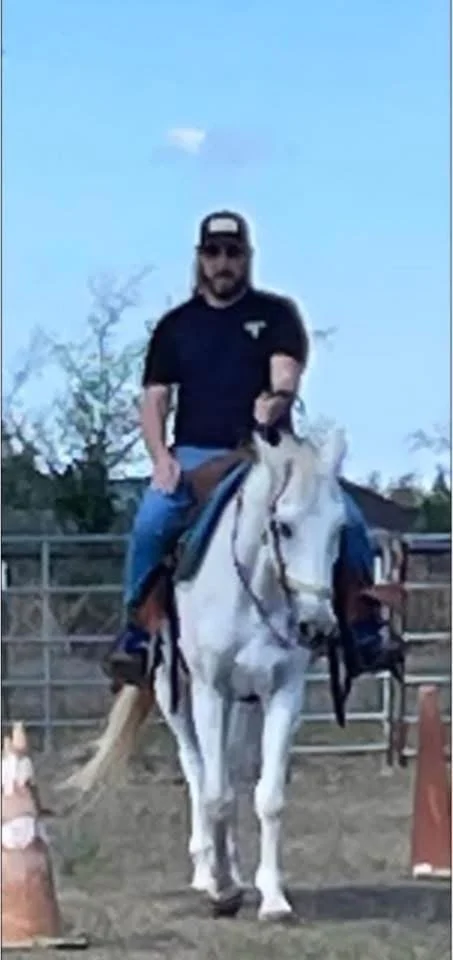
And when he’s not on the road or in a session, you’ll find him somewhere you probably wouldn’t expect. Out at a horse rescue. Peaceful Acres. It’s not for show. No stage. No audience. No applause. Just animals that have been neglected or mistreated and a place trying to give them a second shot. He goes out there, rides when he can, helps where he can, and just stays present. It’s a different kind of rhythm.
But in a way, it makes perfect sense.
Because at its core, everything Frankie does, whether it’s music, teaching, or showing up for something like that, is built on the same thing.
Consistency. Care. And doing the work when no one’s watching.
Right now, he’s working on something he’s been talking about since high school. An instrumental record. He actually finished one during COVID. Then scrapped it. Deleted the whole thing. Started over. Not because anyone told him to. Because it wasn’t right. That tells you everything you need to know about how he approaches the craft.
At the end of our conversation, I asked him a simple question. If the phone rings tonight, the call you’ve been preparing for your whole life, who is it?
Paul McCartney. The Sphere.
Frankie G isn’t the story we’re used to telling. He’s not the overnight success. He’s not the viral moment. He’s something much better. He’s the guy who shows up. Does the work. Stays ready. And when the moment comes, he’s already in position.
Frankie G figured that out early. He never let go of it. And I hope he never does.
Rooted in the South. Driven by Purpose. Built for Living.