
Fred LeBlanc: The Party Starts Here
This is a story about Fred LeBlanc, frontman, drummer, songwriter, and the driving force behind Cowboy Mouth, a band built on energy, connection, and the belief that life is meant to be lived out loud.
There aren’t many lead singers who sit behind a drum kit.
Actually, there are almost none.
When I run it through my own mental database, not Google, not ChatGPT, just memory, a few names come up. Don Henley. Phil Collins.
And then, somewhere on the other end of the spectrum…
Fred Landry LeBlanc.
Am I biased? Absolutely.
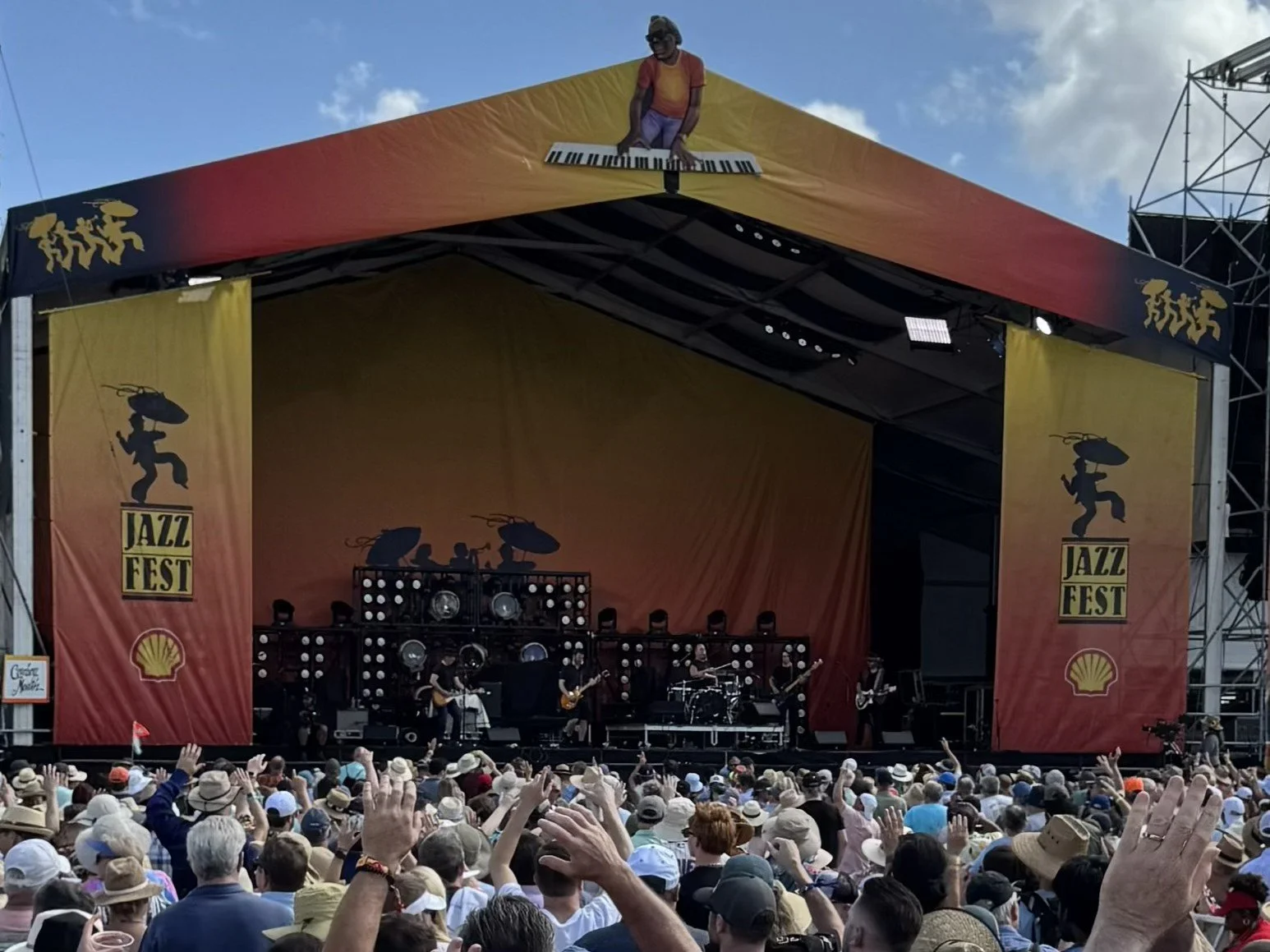
I grew up in New Orleans in what I’d call the heyday of Cowboy Mouth. I remember seeing Fred play with Dash Rip Rock, and then somewhere between high school and college, Cowboy Mouth became a constant.
It didn’t matter where they were playing.
We were going.
Mardi Gras weekends. Parade routes. St. Charles Avenue. Endymion on a late Saturday afternoon. You might catch them rolling by on a float… and then somehow, some way, end up at Rock ’n’ Bowl or Tipitina’s later that night, watching them take the stage just before midnight and turn a room inside out.
And it didn’t stop when I left New Orleans.
Even after moving to Atlanta, I still check the schedule. Not just to go myself, but to bring people who’ve never seen them before.
Fred LeBlanc virgins (FLVs).
Because a Cowboy Mouth show isn’t something you watch.
It’s something you become a part of.
One of the best descriptions of Cowboy Mouth I’ve ever heard came from Cake Magazine. I’m probably not quoting it perfectly, but it went something like this:
On a bad night, they’ll raise the roof.
On a good night, they’ll save your soul.
It’s 100% accurate.
There’s a moment, somewhere between the first song and the last, where the line between the band and the crowd disappears.
What you’re left with doesn’t feel like a concert.
It feels like something else entirely. Something shared. Something real.
I wanted to understand how that happens.
I got my chance when Cowboy Mouth came through Woodstock, Georgia.
What I found had very little to do with music.
We met in a conference room at the hotel where the band was staying. Not a stage. Not a green room. Not a bar in New Orleans. Just a table, two chairs, and a one-hour timer. Fred had a hard stop for soundcheck at MadLife Stage & Studios, so we set it. Sixty minutes. Clean. Efficient. Professional.
That lasted about five minutes.
I hit record to get things rolling and gave him a little context. Told him I was from New Orleans and graduated from Newman.
He didn’t miss a beat.
“Oh, I knew where you went to school, James. I could tell by your haircut,” he said.
And just like that, the interview got a whole lot better.
Because before either of us knew it, the alarm was going off.
I started packing up my gear. He looked at me and said he was having so much fun he didn’t want to stop.
So I didn’t.
I kept the recorder rolling.
Right up until the point where I threw Fred and his longtime bandmate, John Thomas Griffith, in my car to get them to soundcheck on time.
That’s Fred.
There’s a structure. And then there’s what actually happens.
Born Without Sound, Built on Energy
Most stories about musicians start with influence. Fred’s starts with absence.
“I was born deaf… I couldn’t hear for the first three years of my life.”
No surgery. No clear path. Just parents trying to figure it out in real time.
“They just laid my head on speakers… and all of a sudden I could actually sing… before I could even talk.”
Not notes. Not theory. Just vibration and feel.
Connection before comprehension.
That matters later.
Because when Fred talks about music, he doesn’t start with sound. He starts with energy.
And that instinct showed up early.
“I told my parents I wanted a big green garbage can like Oscar the Grouch… and I just jumped in it and disappeared for an hour.”
Then one day, something clicked.
“I turned it over and started beating on it… and I was like, ‘I like this.’”
No lessons. No roadmap.
Just a kid, a garbage can, and something inside him that knew exactly what to do.
The Misfit Who Chose His Own Way
Jesuit High School.
Structure. Expectations. A clear path. And Fred never quite fit inside of it.
“I was pretty much a misfit. I didn’t fit in anywhere.”
That’s not rebellion for the sake of it. It’s something deeper.
“I’ve always wanted to go my own way… it’s never really been about the material rewards.”
While everyone else was listening to what was popular, Fred was digging.
Bo Diddley. Jerry Lee Lewis. Patsy Cline. Muddy Waters.
“Anything I saw that looked interesting… I’d put it on.”
And then came punk.
“I didn’t want to listen to that punk crap… and then I took it home and went—whoa.”
Not because of how it sounded. Because of what it meant.
“Not punk rock per se as a musical form… but as an attitude… don’t go the normal way.”
That idea stuck.
And it showed up long before Cowboy Mouth.
“I’ve played in front of 150,000 people… and I’ve played in front of one person.”
And the approach never changed.
“And you know what I did at both those shows? I kicked ass.”
That’s the job.
It Was Never About Fred
At some point, Fred figured something out that most performers never do.
“It’s not about me. It’s about them. It’s always about them.”
Somewhere along the way, Fred learned how to connect with people by watching someone else do it better than anyone in the room.
Ned “Hoaky” Hickel, who he played with during his time in Dash Rip Rock.
The kind of guy everybody loved without trying. Fred didn’t understand it at first. So he asked him.
“How do you do it?”
Hoaky gave him an answer that didn’t sound very rock and roll. He said he read How to Win Friends and Influence People by Dale Carnegie.
In a world of loud guitars, late nights, and barroom chaos, that’s not exactly what you expect to hear. But the lesson stuck. Listen. Pay attention. Make it about the other person. Not a persona. Not a trick. Just understanding how people work. And once Fred saw that, everything on stage started to make more sense.
The audience. The room. The energy in between.
That shift is what turned Cowboy Mouth into something different. Not just a band. Not just a show. Something closer to a shared experience.
At first, it was simple.
“We’re going to party.”
And then it evolved.
“Thank you. Believe in yourself. Anything’s possible.”
And the response was immediate.
“It was almost like a whiplash… people were waiting to hear something like that.”
That’s when the mission became clear.
“The goal wasn’t to get invited to somebody else’s party. The goal was to get everybody to want to come to your party.”

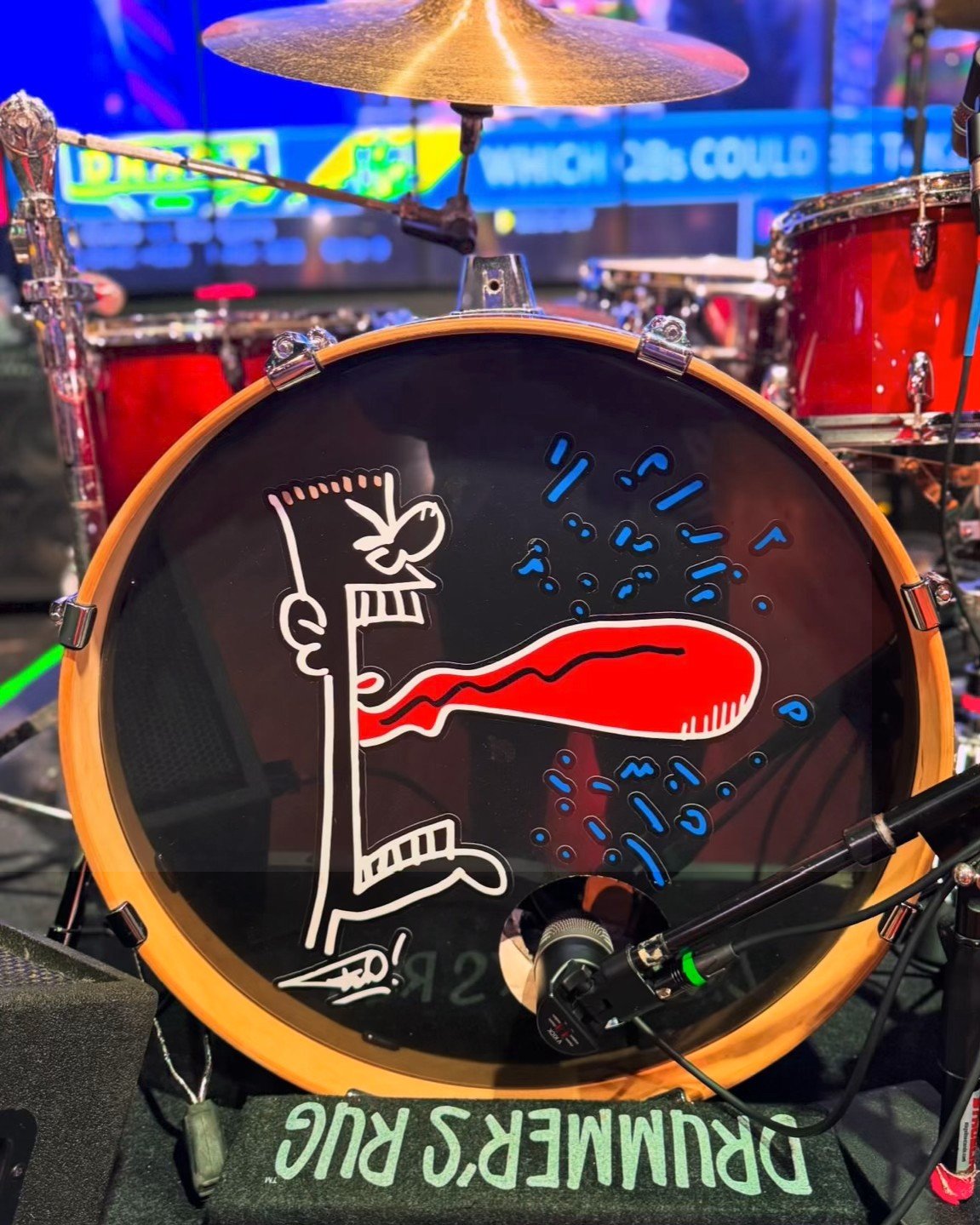


That’s Cowboy Mouth. That’s why people keep showing up. It’s not just the music. It’s what the music creates. And it’s not just Fred.
It’s John Thomas Griffith. Brian Broussard. Frankie G.
“A band is a group of people that meet at a certain point in their lives… and may or may not create magic.”
And when it’s there…
“You do your best to hang on to it.”
Life Is to Be Lived
By the time we wrapped, the timer had long expired. The plan was gone. And we were late. So we packed up, walked out, and drove straight to soundcheck. Because that’s how this works. There’s structure. And then there’s life. And if you’re lucky, you spend your time somewhere in between. Fred doesn’t talk about balance. He talks about living. He has no intention of leaving a beautiful corpse.
“I want this body used… I want it wrinkled… beat up as hell.”
Every scar has a story. Every moment counts.
“Life is to be lived. It’s to be enjoyed as much as possible.”
Not always easy. Not always clean. But real.
And if you do it right…
“I’m the luckiest man I know… gratitude is a very, very, very powerful emotion.”
We made it to soundcheck. Barely.
If you’ve never seen Cowboy Mouth live, go.
Feel the drums. Watch the room transform.
Worst case, you raise the roof.
Best case… you might just save your soul.