
Napoleon House in New Orleans: Neighborhood Cuisine, Done Right
Some places do not announce themselves.
They do not ask for attention. They do not chase relevance.
They simply stay open.
Napoleon House in New Orleans has been doing exactly that for more than two centuries, quietly holding its place at the corner of Chartres and St. Louis Streets in the French Quarter. No velvet ropes. No reinvention cycles. Just thick brick walls, creaking shutters, ceiling fans turning slowly overhead, and a courtyard that seems to breathe with the city.
This is not a place built for spectacle.
It is built for return visits.
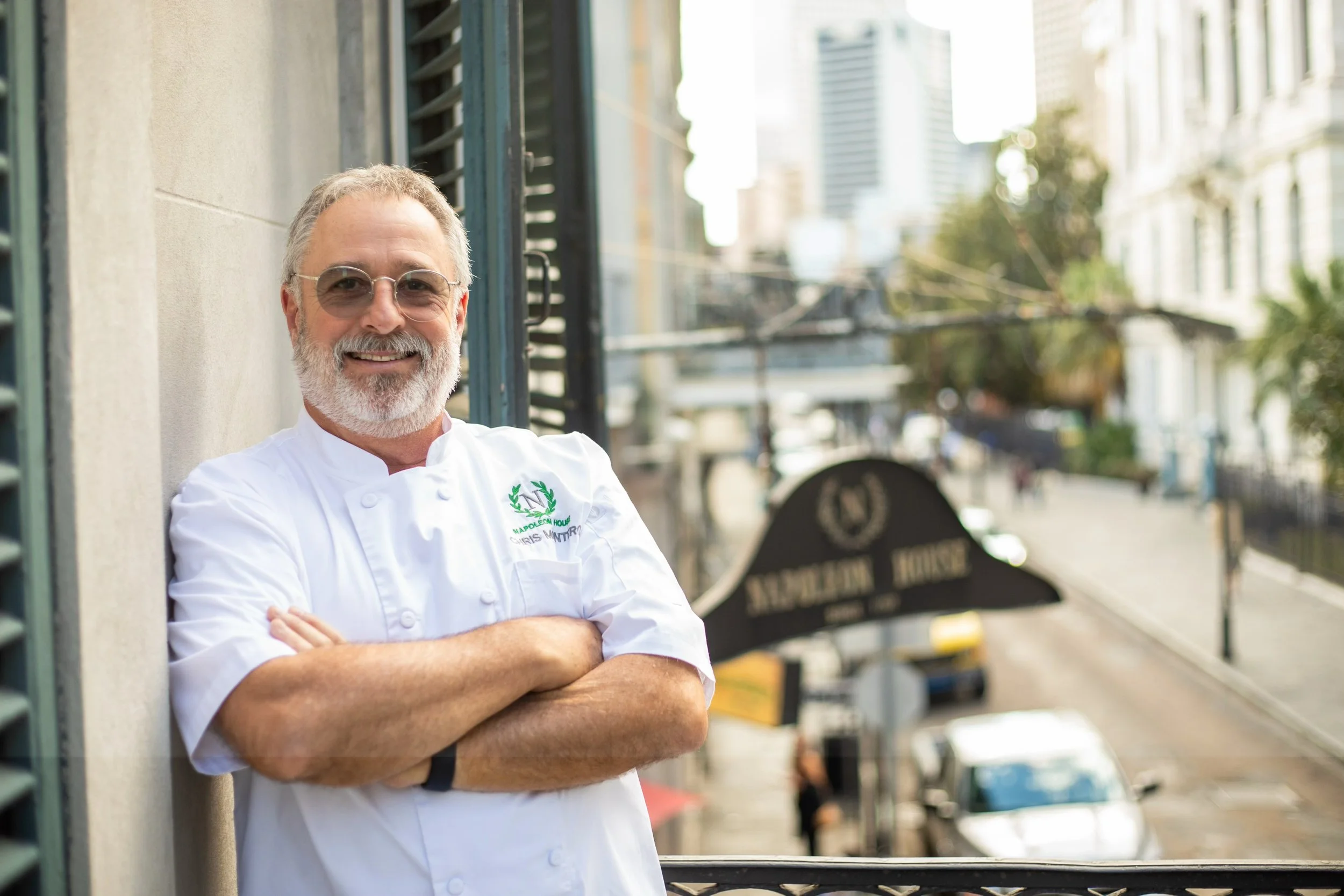
Today, that continuity is carried forward by Chris Montero, Executive Chef and General Manager of Napoleon House. An eighth generation New Orleanian, Montero approaches the restaurant not as a caretaker of nostalgia, but as a working steward. His connection to the French Quarter predates his career, shaped by family history, inherited habits, and a deep belief that tradition survives only when someone actively chooses it every day.
A Pimm’s Cup That Became a New Orleans Identity
There are cocktails that belong to cities, and then there are cocktails that belong to places.
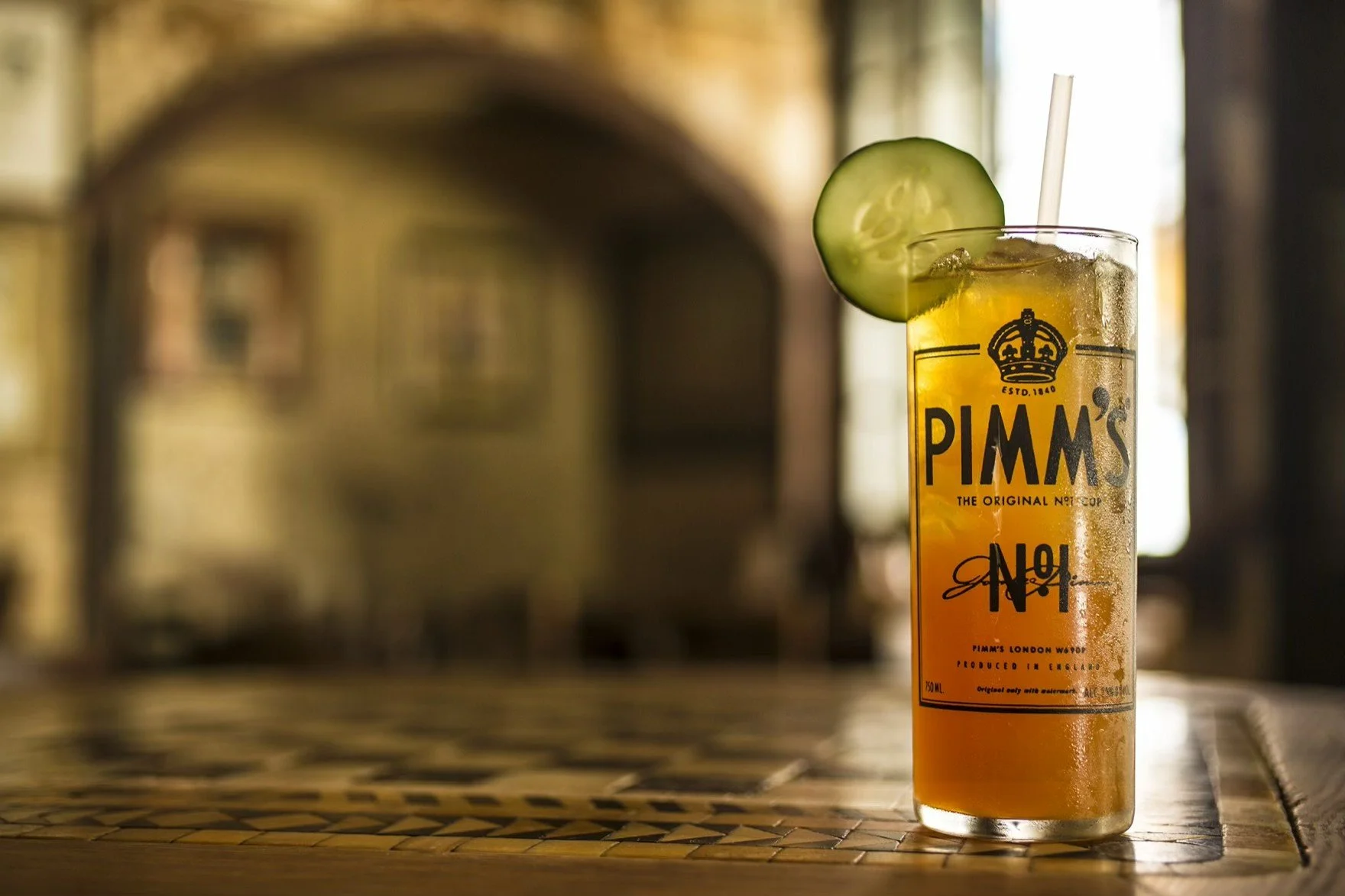
At Napoleon House, the Pimm’s Cup is not an accent. It is a signature. The restaurant is widely credited with introducing Pimm’s to America, a fact that still catches first time visitors off guard.
What arrives at the table is deceptively simple. Light. Refreshing. Garnished with cucumber. The kind of drink you finish faster than expected, then order another.
For Montero, the appeal is restraint. He prefers the classic version served over ice rather than frozen, believing the original best suits the rhythm of the room. It is not meant to shout. It is meant to settle you in.
Some have asked whether the Pimm’s Cup is a New Orleans tradition.
Others would argue it is something more specific.
It is a Napoleon House cocktail.
The Hot Muffuletta at Napoleon House
New Orleans has no shortage of opinions when it comes to the muffuletta.
Cold versus hot.
Classic versus personal.
Napoleon House made its choice long ago.
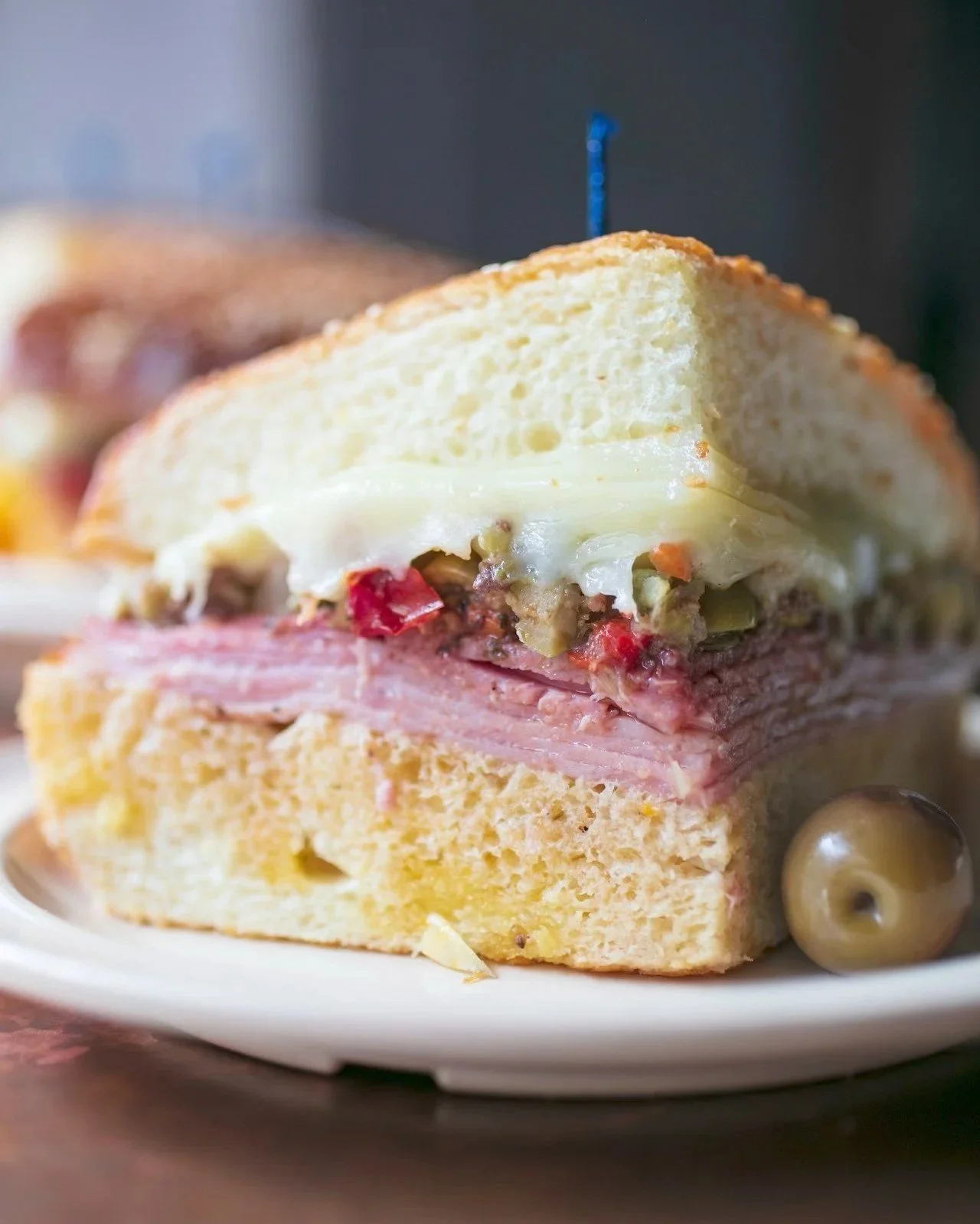
Here, the muffuletta is served hot, toasted until the cheese melts and the bread transforms into something sturdier and more deliberate. The warmth changes the structure. The flavors open up. The sandwich becomes something meant to be shared, not rushed.
The decision traces back to Uncle Joe, who preferred pastrami instead of mortadella. That choice remains today. It delivers a deeper flavor and a more assertive bite, staying true to the spirit of the sandwich without overthinking it.
You don’t eat this sandwich in a hurry. You talk over it. You remember it.
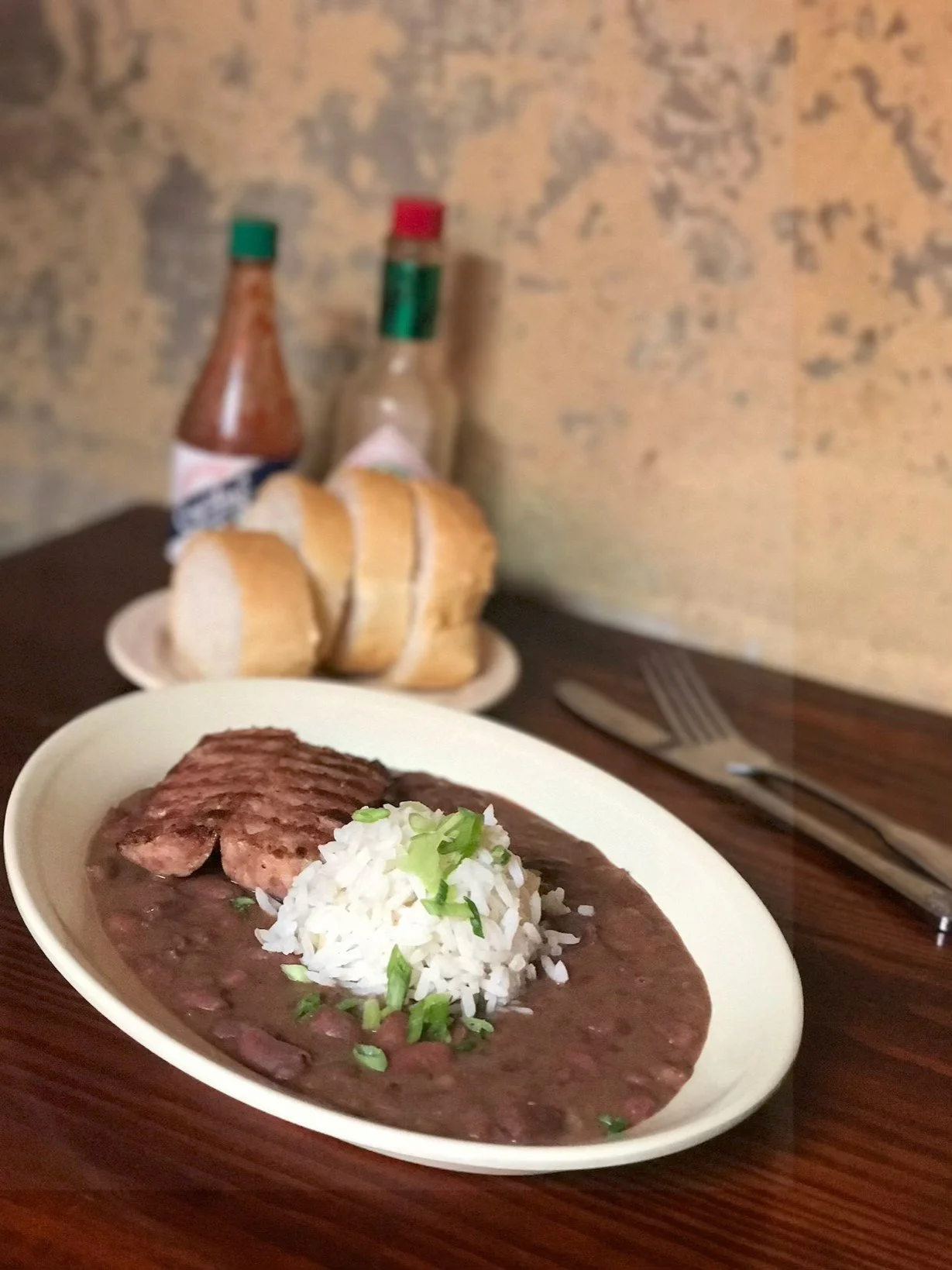
Red Beans at Napoleon House
There are dishes that feel tied to specific days.
In New Orleans, red beans and rice belong to Monday.
At Napoleon House, they are prepared the way they always have been. Slow. Patient. Built on time rather than shortcuts. The beans are not soaked. They are cooked low and slow in a steam kettle, enriched with three kinds of pork fat, just as Montero’s grandmother made them.
The result is a balance that locals recognize immediately. Creamy without losing structure. Rich without excess.
Red beans are not meant to impress.
They are meant to sustain.
Served alongside rice and sausage, they reflect the same philosophy that defines the rest of the room. Show up. Do it right. Do it again tomorrow.
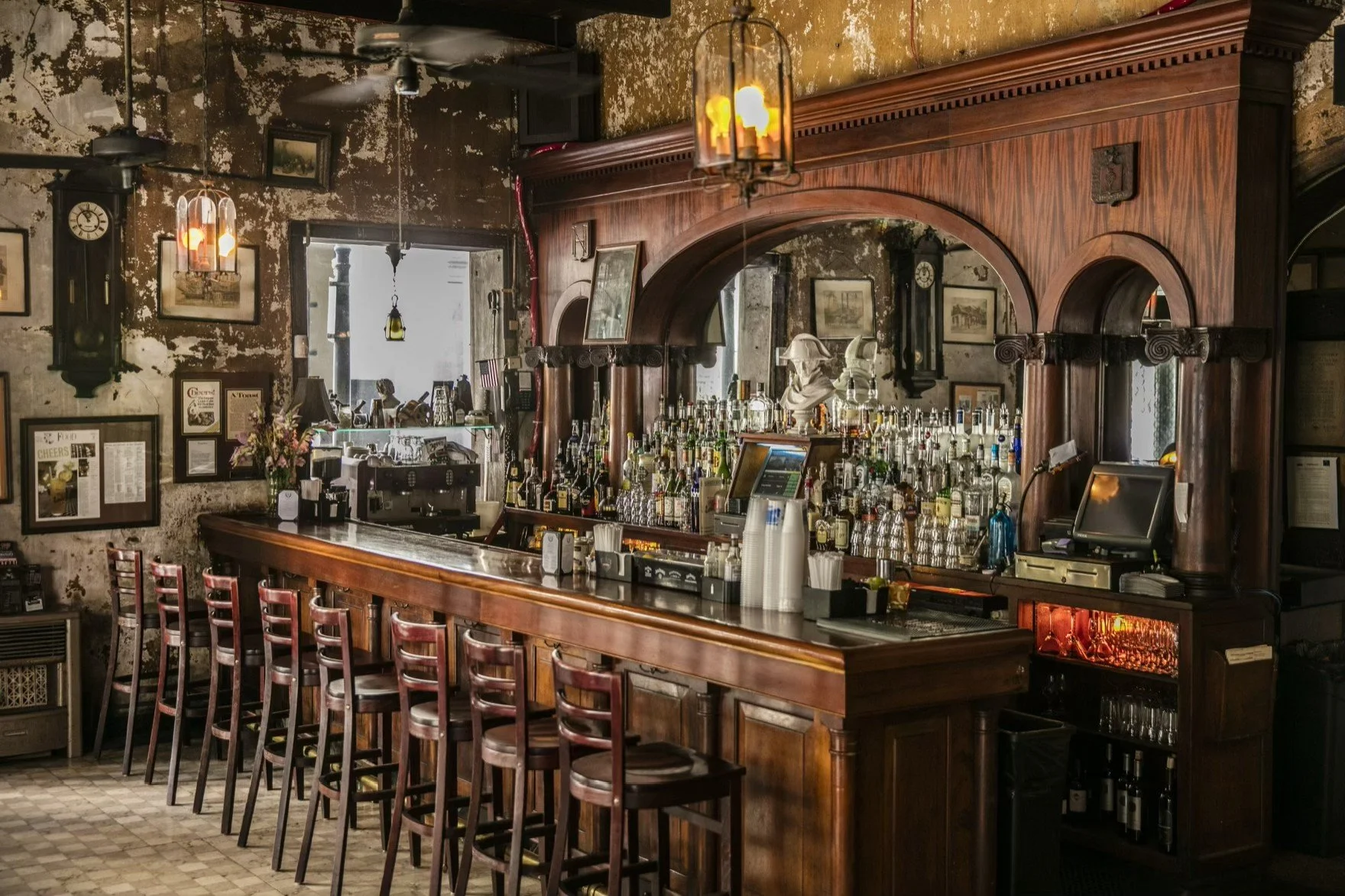
A Historic French Quarter Building
Napoleon House was built in the late 1700s and was later intended as a residence for Napoleon Bonaparte after his exile. He never arrived, but the building remained.
Over time, it became something more valuable than a monument.
It became useful.
While other buildings in the French Quarter were renovated, rebranded, or reimagined, Napoleon House stayed largely the same. The walls were not smoothed. The floors were not leveled. The imperfections were left intact.
Those details matter.
They remind you that the building has lived a life before you arrived and will continue long after you leave.
This is not nostalgia. It is continuity.
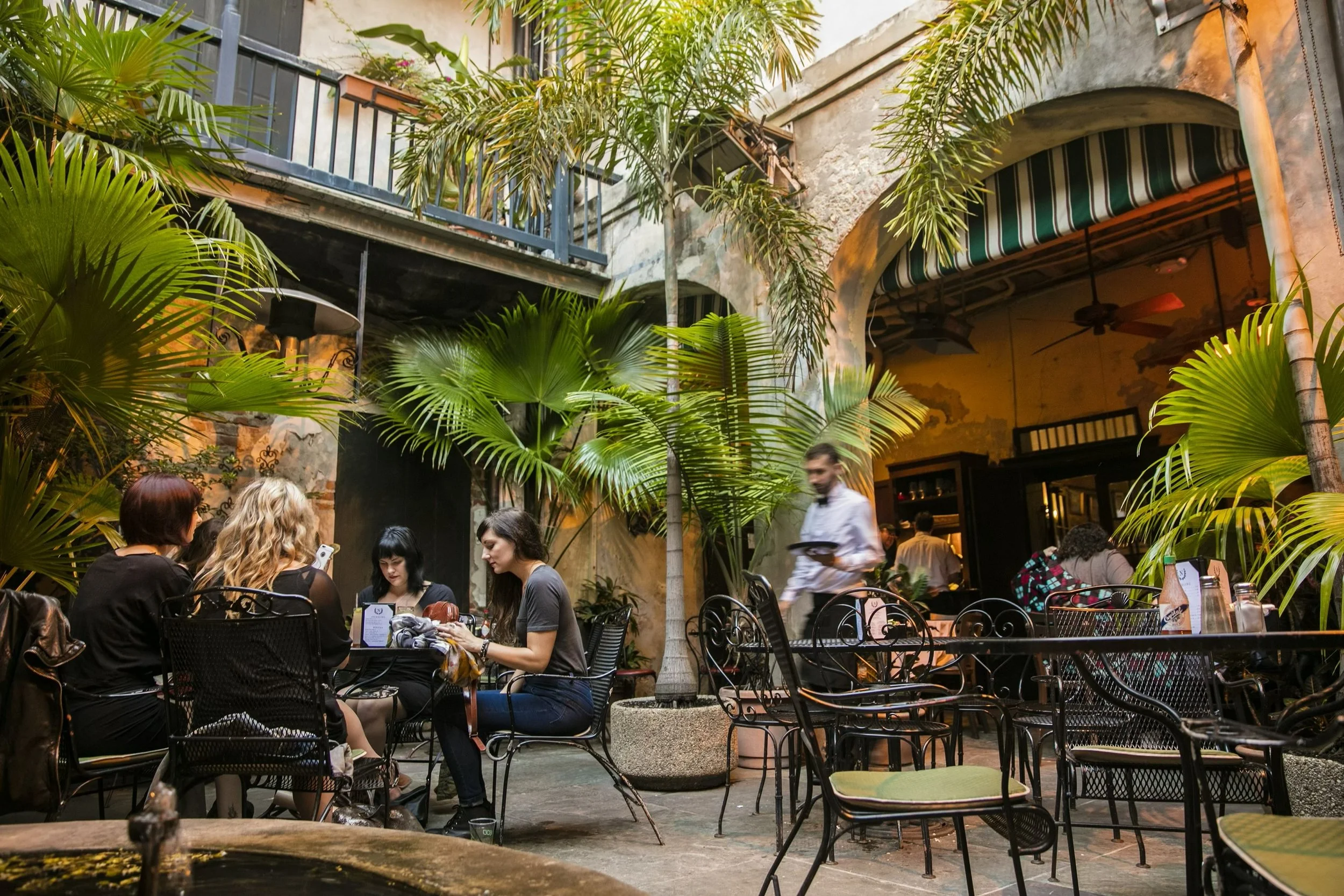
The Courtyard at Napoleon House
The courtyard at Napoleon House is one of the French Quarter’s quiet constants.
Shielded from the street, softened by greenery, and cooled by shade, it functions less like a patio and more like a shared living space. Conversations overlap. Glasses clink. Time stretches.
For Montero, the courtyard represents the heart of the building. It is where locals linger and visitors stumble into something real. No one rushes you out. They never have.
This is where the restaurant reveals its purpose.
Permission.
Permission to slow down. Permission to stay longer than planned. Permission to let the day unfold.
A French Quarter Neighborhood Institution
New Orleans welcomes the world, but it survives on its neighborhoods.
Napoleon House has always understood that balance.
Tourists arrive daily, drawn by guidebooks and reputation. Locals return because this place belongs to them. The staff recognizes faces. Orders come without explanation. Stories pick up where they left off.
That is the difference between a landmark and an institution.
One is visited.
The other is relied upon.
Carrying it Forward
Napoleon House does not market itself as historic.
It does not need to.
History lives in the way the Pimm’s Cup is poured. In the way the muffuletta is served hot without apology. In the way red beans arrive exactly as they should.
Most of all, it lives in the people who choose to care for it.
For Chris Montero, Napoleon House is more than a project. It is the place where his love for New Orleans, its food, its history, and its people converge. A restaurant that belongs to the city because it has always been treated that way.
Some places survive by changing constantly.
Others survive because the right person knows what not to change.
Napoleon House belongs firmly in the second category.
Neighborhood cuisine done right.
All Photography Courtesy of Napoleon House.
Visit Napoleon House
Book a Private Event
Never miss an update from Retire Southern